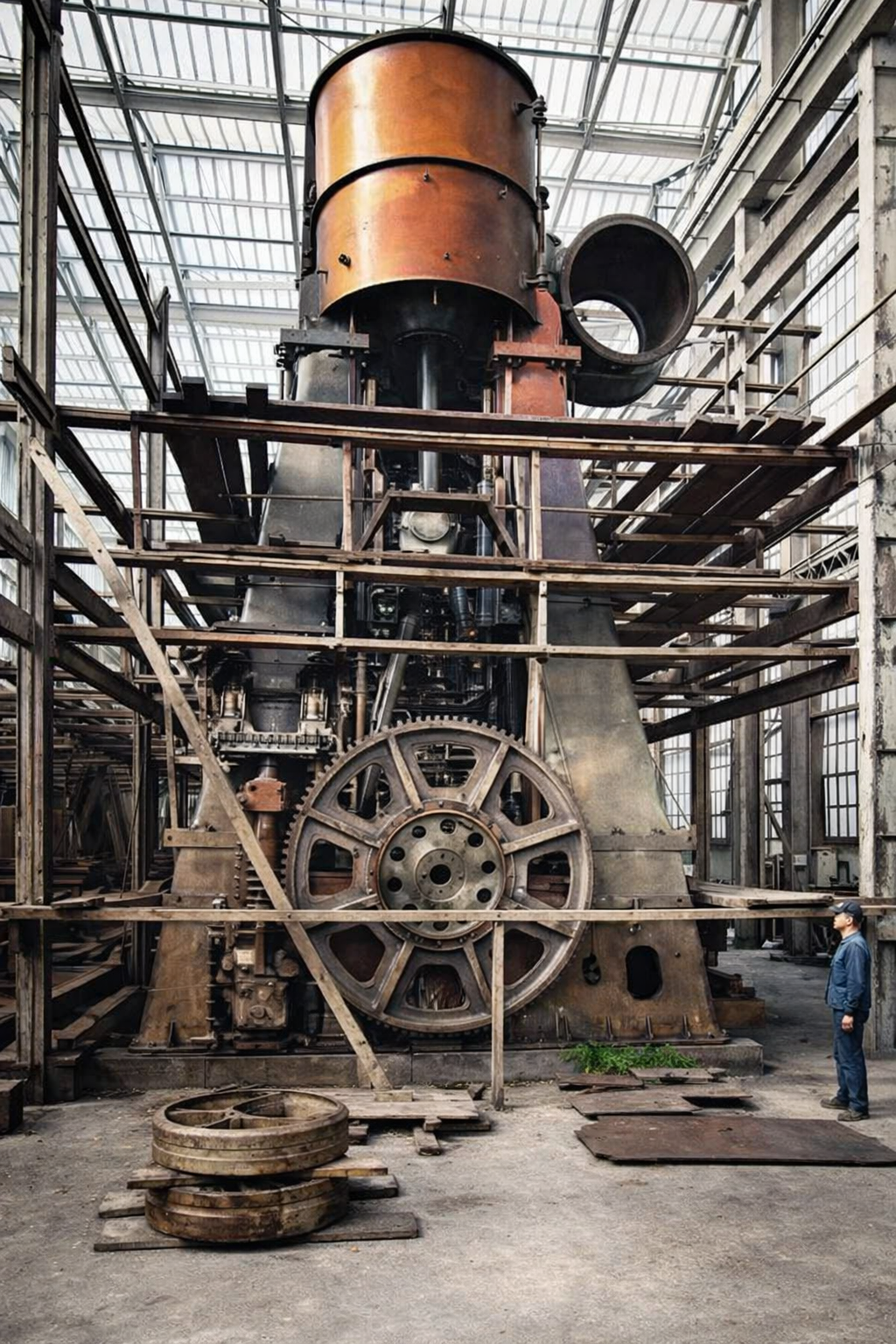
Steam-Turbine and Diesel Motor Liners
Steam turbines and diesel engines offered different answers to the same liner problem: how to deliver reliable power across long routes while controlling fuel use, machinery space, maintenance, and operating cost.
Basic answer
Why did some lines embrace diesel while others stayed with turbines?
Steam turbines were extraordinarily well suited to large, fast ships and helped transform express-liner performance in the early twentieth century. Diesel engines promised lower fuel consumption and strong efficiency at moderate speeds, which made them especially attractive to long-distance and intermediate services where outright record speed mattered less.
Engineering tradeoffs
Different machinery for different priorities
Steam turbines
Smooth, powerful, and effective at high output, but dependent on boilers, steam systems, and fuel-intensive machinery plants.
Diesel engines
Could offer better fuel economy and eliminate boilers, though early large marine diesels brought their own maintenance and vibration challenges.
Speed
The fastest prestige liners generally remained turbine ships through much of the classic era.
Route economics
Motor liners became particularly attractive where endurance, fuel economy, and lower operating cost mattered more than Blue Riband ambitions.
Case studies
Propulsion choices in practice
Selected sources
Where this comparison comes from
Continue the series