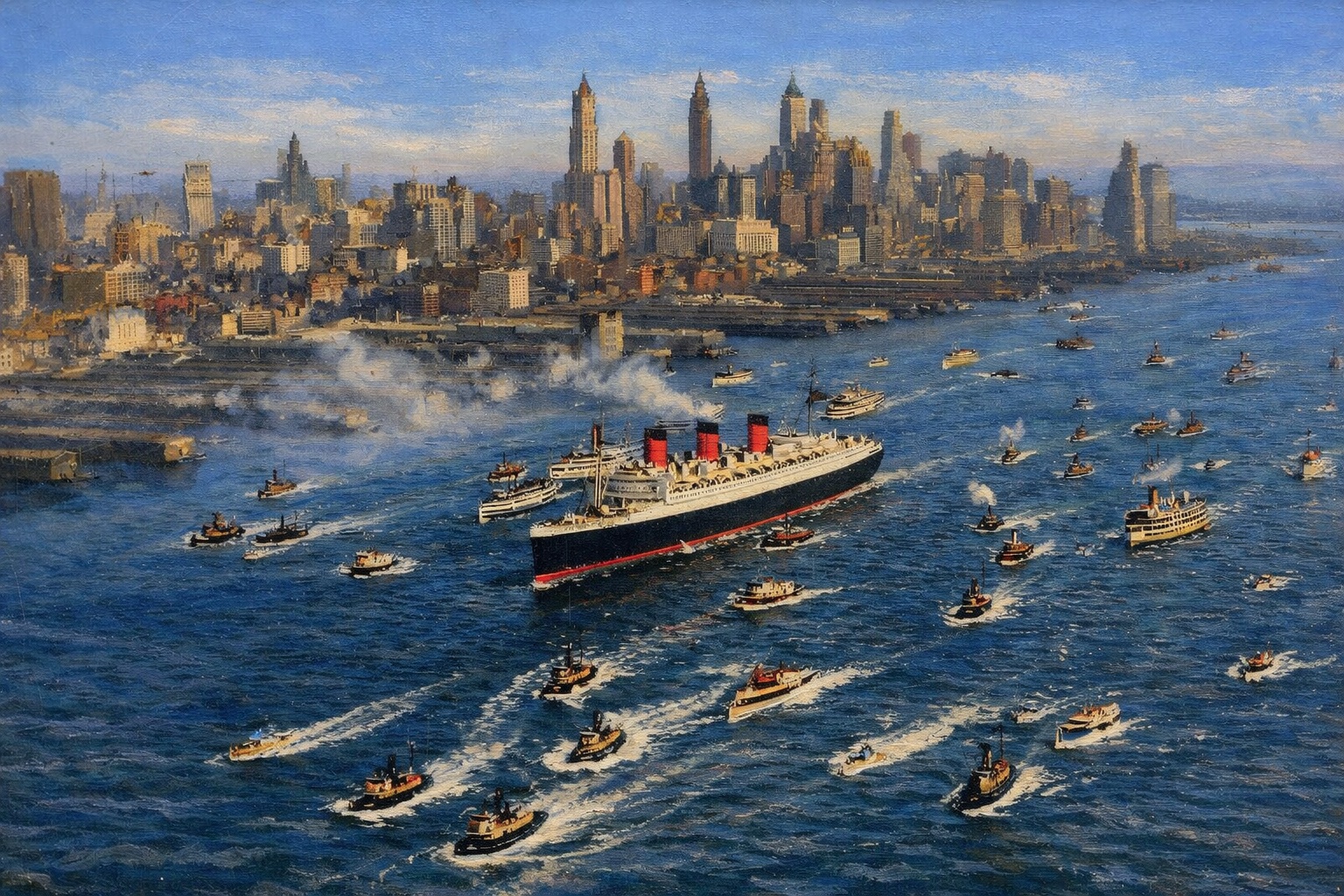
Speed and Comfort: What Did Ocean Liner Companies Optimize For?
Speed and comfort were not opposite goals, but they competed for money, weight, space, fuel, publicity, and design attention. Different liners balanced them differently.
Basic answer
Was the fastest liner automatically the best liner?
No. Speed could shorten crossings, win publicity, improve mail performance, and attract time-sensitive passengers. But extreme speed demanded powerful machinery, fuel, engineering space, maintenance, and operating expense. Comfort demanded space, stability, service staff, public rooms, cabin volume, and money of its own.
The Smithsonian's ocean-crossing material explicitly treats speed and luxury as intertwined competitive goals. The point is not that companies chose one and rejected the other, but that each ship embodied a particular balance.
Tradeoffs
What did extra speed cost?
Fuel
Driving a large hull faster could sharply increase fuel consumption and therefore operating cost.
Machinery
More power meant more boilers, turbines or engines, auxiliaries, ventilation, maintenance, and engineering complexity.
Space
Machinery and fuel occupied volume that could not simultaneously become passenger accommodation or cargo space.
Publicity
Speed records could produce attention far beyond their direct commercial value, making them powerful marketing tools.
Case studies
Different balances
Selected sources
Where this comparison comes from
Continue the series