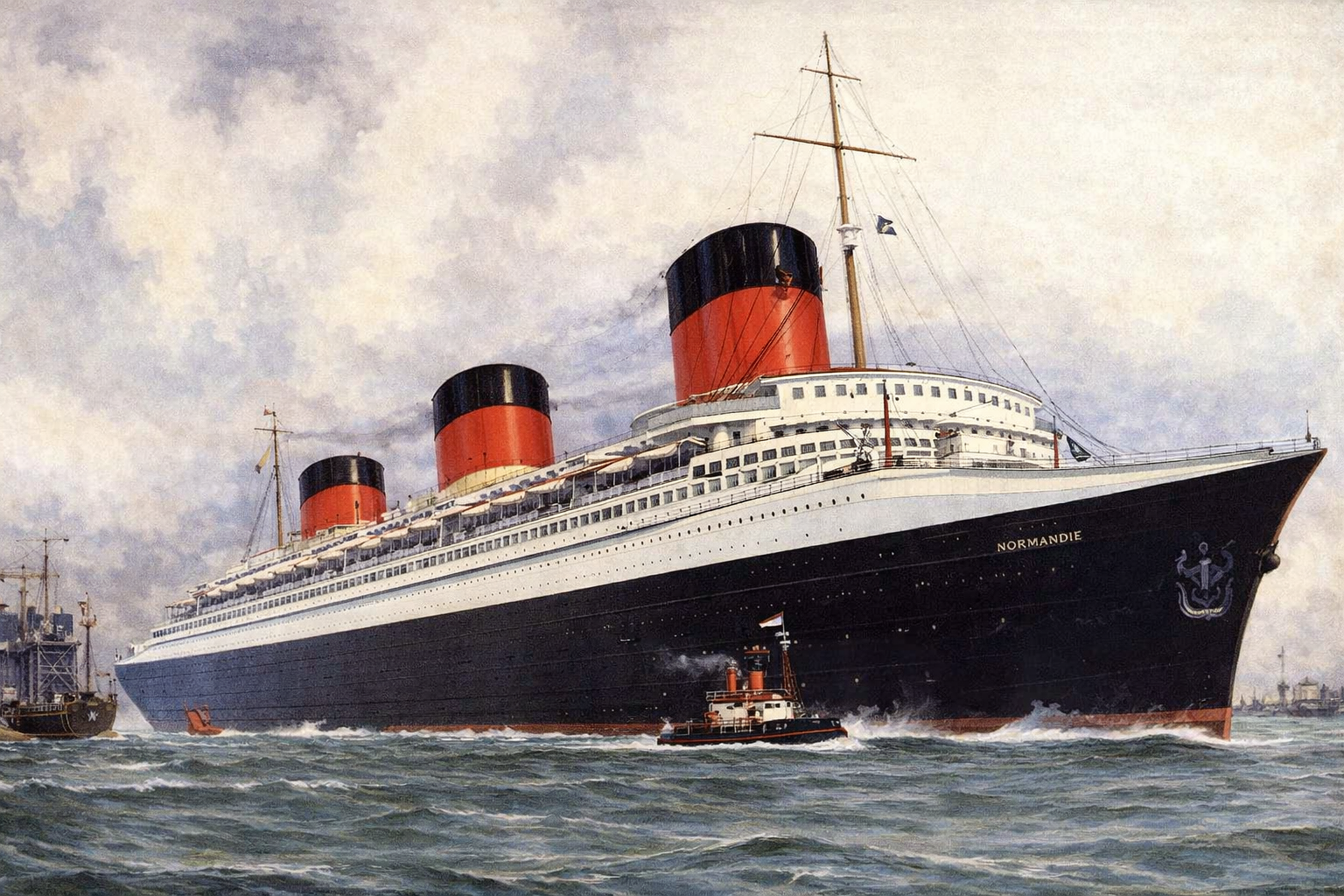
French and British Flagships Between the Wars
Interwar French and British liners projected modernity differently. Normandie and Queen Mary shared the same Atlantic, yet their design languages, national symbolism, and fleet contexts were not interchangeable.
Basic answer
Why did Normandie and Queen Mary feel so different?
Both were large, fast North Atlantic flagships, but they emerged from different company traditions and national design cultures. French Lines & Compagnies describes Île de France and Normandie as expressions of French luxury, art de vivre, modern decoration, and technical ambition. Cunard's Queen Mary projected British engineering confidence, continuity, scale, and dependable express service.
Different presentations of modernity
National identity became part of the product
French Line
Modern decorative arts, cuisine, publicity, and a consciously French cultural identity became central to the flagship experience.
Cunard
British scale, engineering, route reliability, and a more restrained continuity with established liner traditions shaped the presentation.
Normandie
Entered service in 1935 and immediately combined record-setting speed with a highly orchestrated visual identity.
Queen Mary
Entered service in 1936 as part of a broader Cunard strategy for sustained two-ship express service rather than a single isolated showpiece.
Case studies
The ships around the flagships matter too
Selected sources
Where this comparison comes from
Continue the series