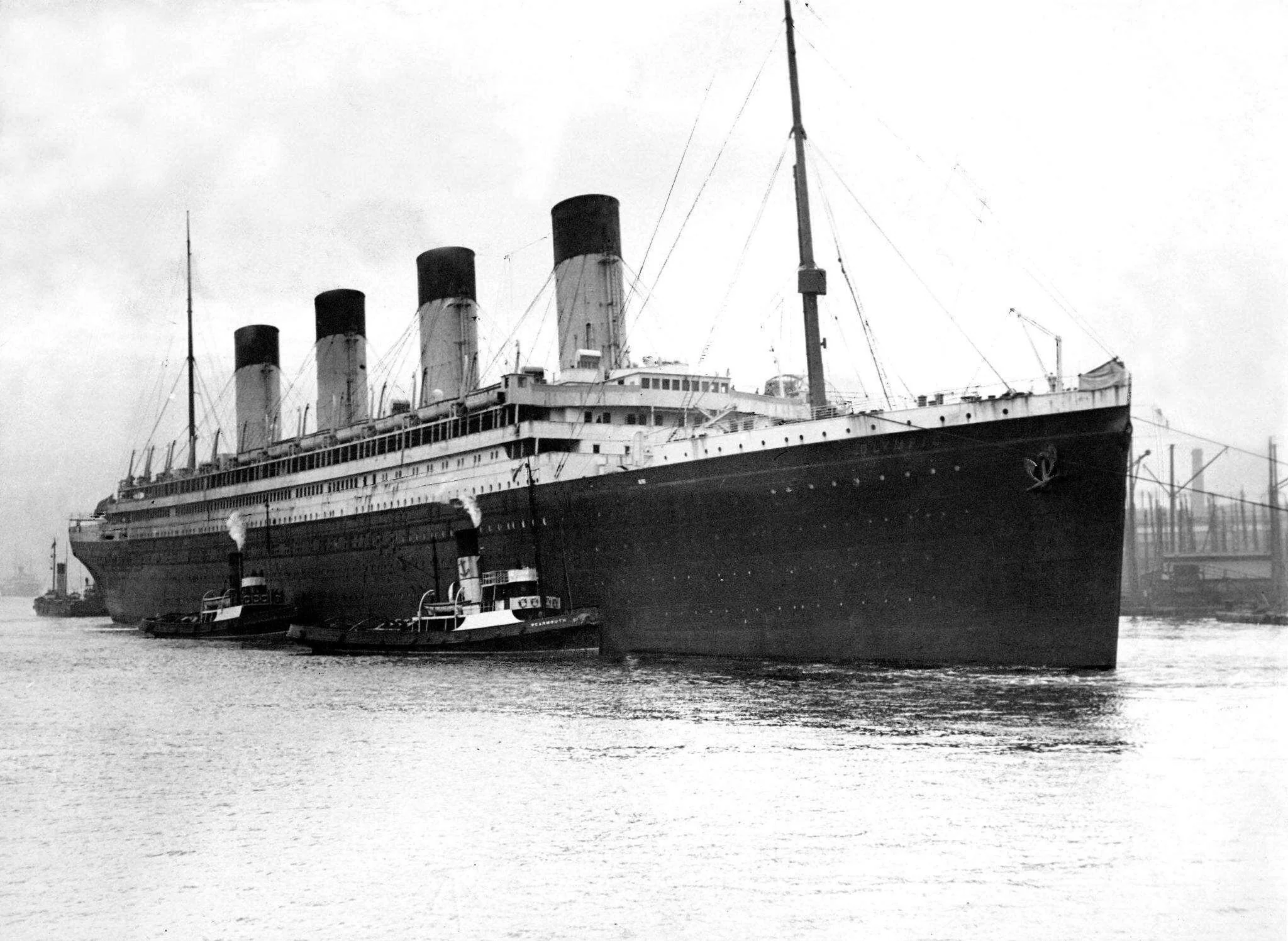
RMS Olympic
White Star Line · 1911 · Ship Guide
Overview
RMS Olympic was the lead ship of the Olympic-class liners built for the White Star Line and entered service in 1911. Best known today as the elder sister of Titanic and Britannic, Olympic had the longest working career of the three and became a defining “early modern” North Atlantic liner—large, steady, and repeatedly refit as technology and tastes changed.
This page is written as a reference doorway: it summarizes widely documented facts, flags uncertainty where it exists, and avoids turning repeated anecdotes into “record” without evidence.
A reader-friendly explanation of why Olympic matters beyond being Titanic’s sister ship.
Key Facts
Note on figures: tonnage, speed, and capacity can shift across sources because Olympic was repeatedly modified. This guide treats exact numbers as “versioned” (as-built vs. postwar refits vs. later service).
Design & Construction (Context)
Olympic emerged from a prewar escalation in North Atlantic competition where size, comfort, and schedule reliability were core selling points. As lead ship, she served as the “learning platform” for the class: early service revealed practical issues, and changes made to Olympic informed later decisions across her sisters and the wider White Star fleet.
After the loss of Titanic (1912), Olympic received substantial safety-related modifications in line with evolving regulations and industry practice. In collector terms, this matters because fittings and printed material can reflect “eras” (pre-1912, post-1912 refit, wartime, postwar modernization, late service).
Service History (Summary)
Olympic began transatlantic service in June 1911 and quickly became a mainstay of the Southampton–New York run. Her career included several well-documented incidents—collisions, repairs, and refits—followed by major wartime service after requisition in World War I, when she operated as a troop transport (often styled HMT Olympic in wartime context).
A notable wartime episode frequently cited in reputable histories is Olympic’s ramming and sinking of the German submarine U-103 (May 1918) while carrying troops—an event with unusually strong documentation compared to many other “legendary” liner anecdotes.
After the war, Olympic returned to passenger service and was modernized in stages (including machinery and accommodation updates). She operated through the 1920s and into the 1930s, increasingly shaped by changing travel economics and the pressures of the Great Depression-era market.
Later History & Final Disposition
In the mid-1930s, following corporate consolidation and fleet rationalization, Olympic was withdrawn from service (April 1935). She was sold for scrap and dismantled between 1935 and 1937.
The ship’s “afterlife” also includes dispersal of fittings: some components were sold, reused, or preserved, and attributions can be complicated. Claims of “from Olympic” deserve the same treatment as any other provenance story: look for purchase records, documented removal context, and verifiable chains of custody—especially for architectural woodwork, fixtures, and loose decorative items.
Olympic as a Working Sister Ship
Olympic's importance is easy to lose behind the fame of Titanic. Yet her long commercial career makes her the best evidence for how the Olympic-class concept actually functioned in sustained service: repeated crossings, repairs, refits, changing passenger classes, and adaptation to new economic conditions.
This is why material from Olympic should not be treated merely as a proxy for Titanic. Similarity can be historically useful, but later alterations mean that photographs, plans, and fittings must be dated before they are used for comparison.
Troopship and U-103
During the First World War Olympic became a major troop transport. On 12 May 1918, while carrying American troops toward France, she encountered the German submarine U-103. U.S. Navy records describe Olympic opening fire and turning to ram; the collision and her propeller damage forced the submarine's crew to abandon the vessel.
The episode became one of the most unusual combat encounters involving a passenger liner. It also illustrates the degree to which Olympic's wartime role differed from her peacetime identity, despite the same hull remaining in service.
Postwar Modernization
After the war Olympic underwent major reconstruction, including conversion from coal to oil firing. Additional overhauls in the late 1920s changed accommodations and public spaces as White Star adapted the ship to evolving passenger expectations.
Those changes are essential for curatorial dating. An “Olympic interior” is not a single fixed design state: the ship of 1911, the postwar ship of the 1920s, and the final Cunard-White Star years all differed in meaningful ways.
Interpretive Notes
Olympic sits at the center of several high-volume narratives: “identical to Titanic,” “the ‘switch’ theory,” “unsinkable,” “secret refits,” and sweeping claims about what parts survived and where they went. Some are grounded in shipyard records and contemporary reporting; others are internet-native lore that collapses timelines and evidence standards.
Ocean Liner Curator treats the ship as both a historical subject and a collecting environment: when a claim materially changes identification or value (e.g., “this fixture is definitively from Olympic”), it should be anchored to sources you would cite publicly—yard documentation, contemporary photographs with clear match points, institutional archives, or reputable scholarship. Where that chain isn’t present, the responsible label is often “unverified” or “attributed.”
Evidence-first ship guideSources (Selected)
This list is intentionally conservative.
- Ocean Liner Curator — Sources (master bibliography)
- Encyclopedia Titanica — reference hub (cross-check against primary documentation)
- National Maritime Museum (UK) — collections & research entry points
- The National Archives (UK) — government records discovery (convoys, requisition context)
- National Museums NI — institutional gateway (Belfast / shipbuilding context)
- U.S. Naval History and Heritage Command — contemporary documentation of Olympic and U-103