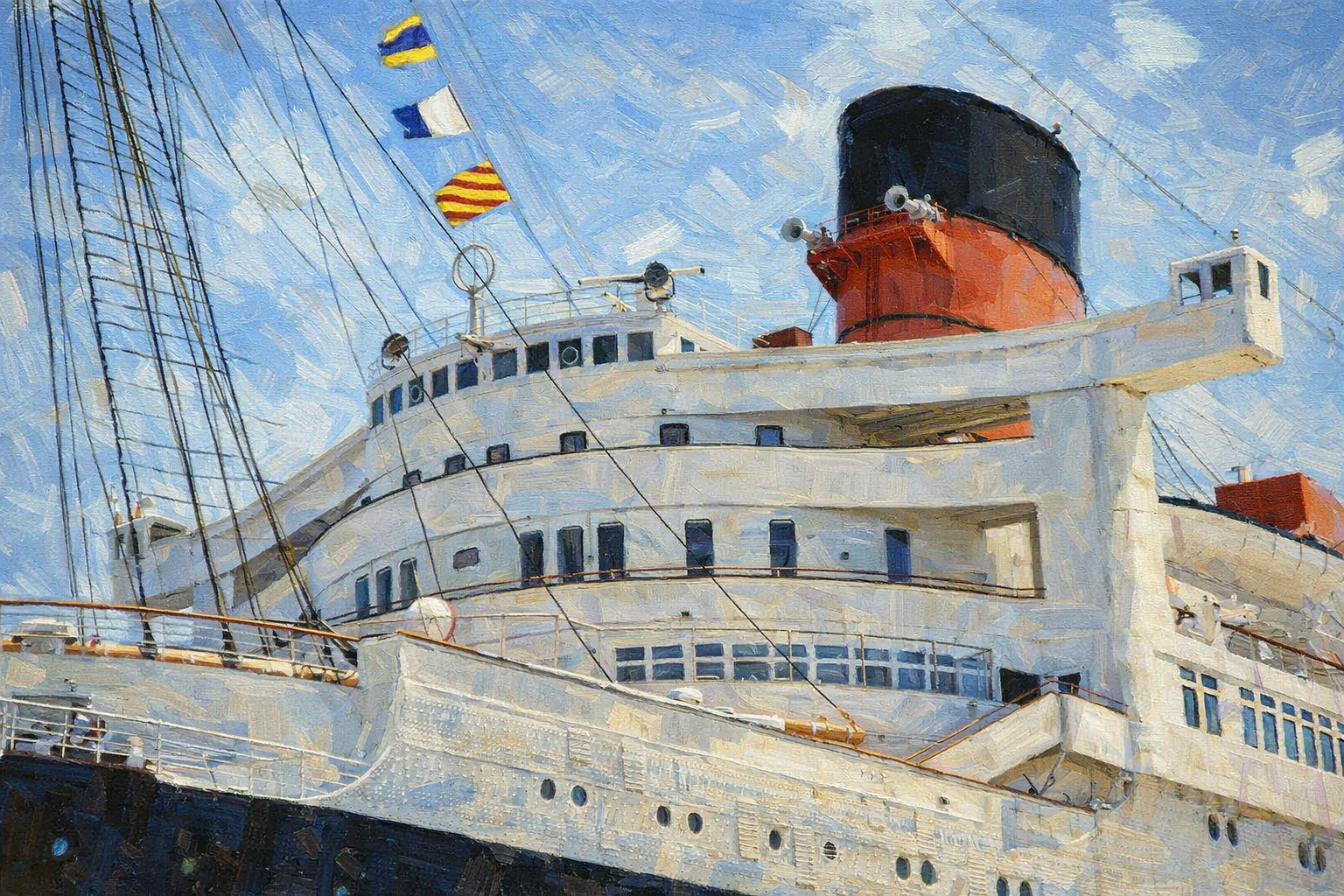
Context Page
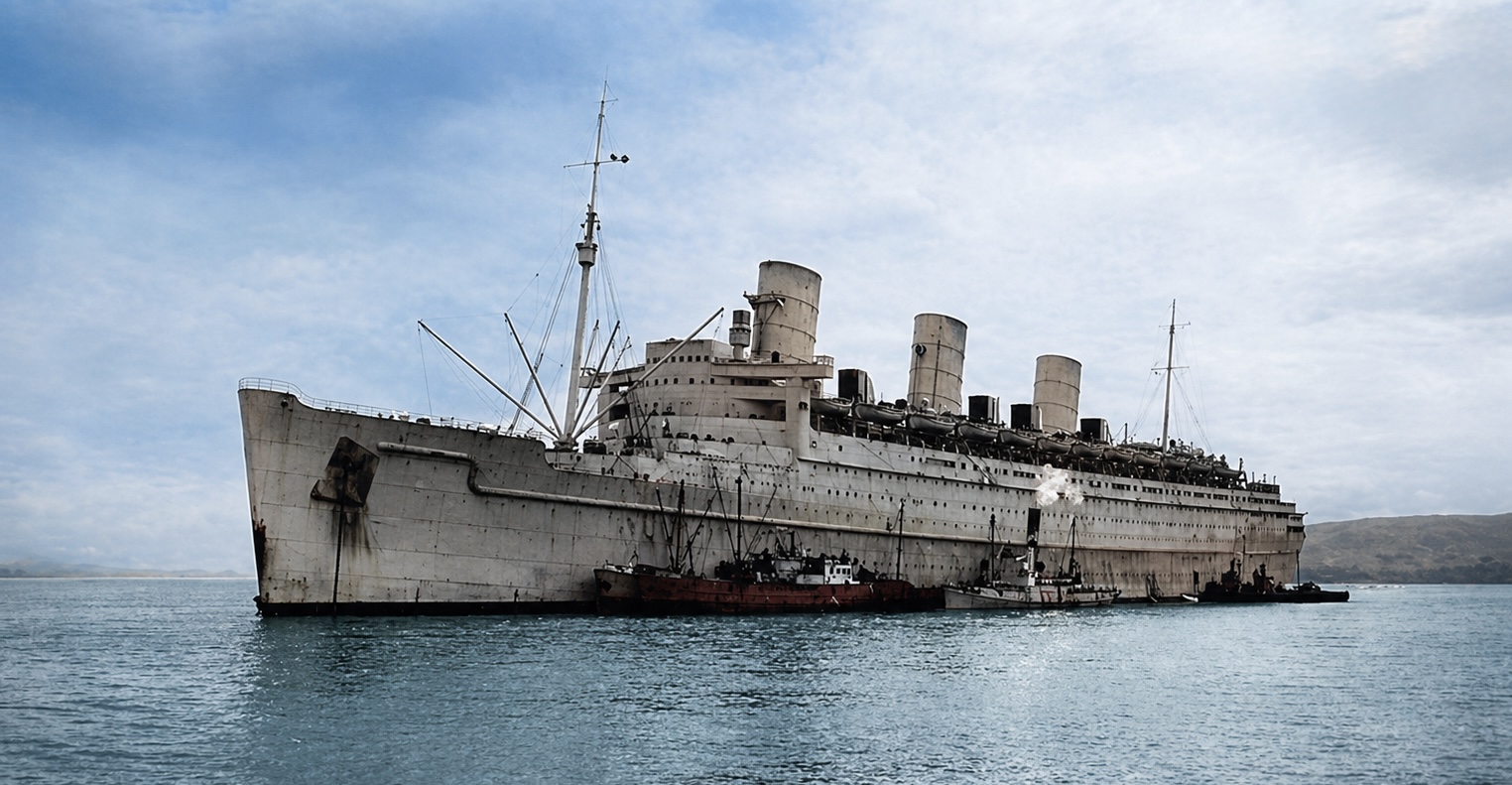
Queen Mary at War
A focused page on the ship’s wartime transformation, troopship identity, altered appearance, and the very different kind of service she performed during global conflict.
Explore wartime serviceA dedicated starting point for exploring one of the most famous liners ever built: her Cunard identity, record-setting Atlantic career, wartime service, interiors, long afterlife, and the material culture that keeps her memory vivid.
This page is meant as a hub rather than a finished argument: a clean route into ship-guide material, Queen Mary essays, interior studies, collecting pages, and wider contextual reading around one of the defining ships of the Atlantic liner age.
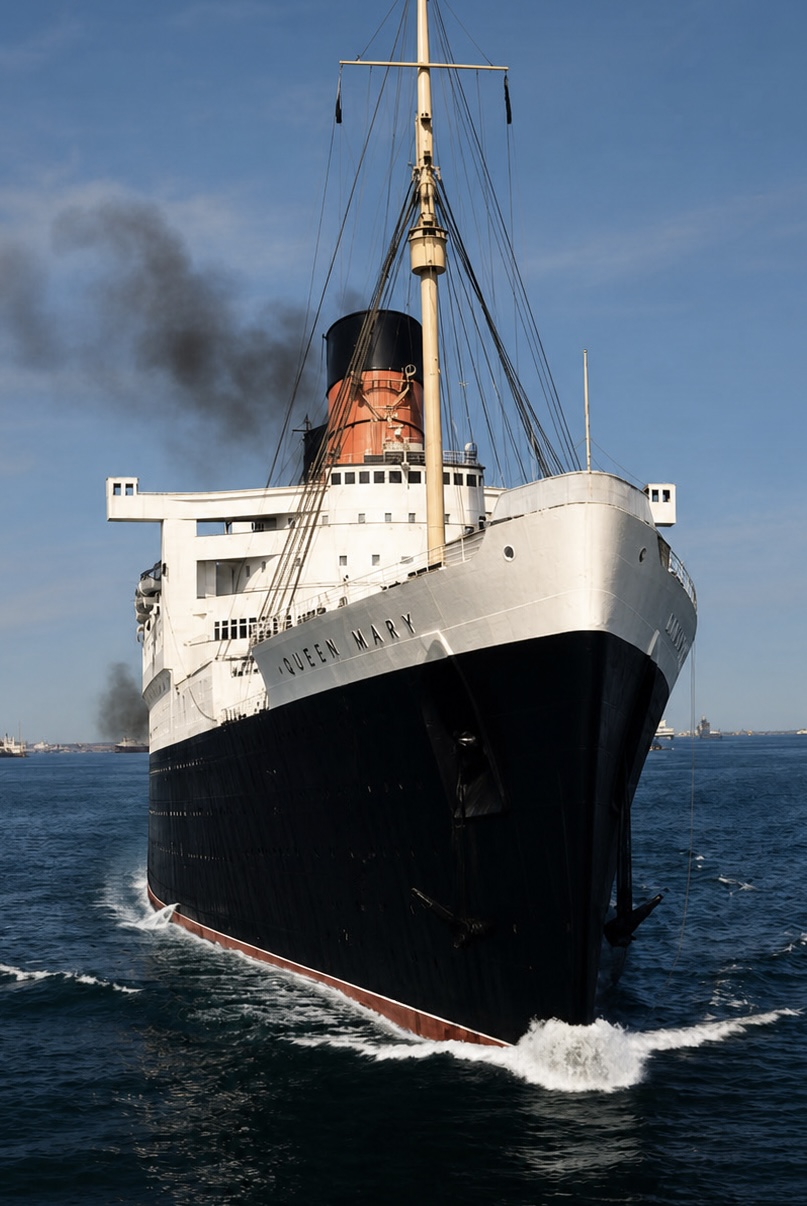
Queen Mary rewards close study because her story spans prestige, speed, interwar design, wartime reinvention, postwar travel culture, and long public memory as both ship and surviving landmark.
Start with the route that best matches your interest: the ship herself, her design and interiors, her wartime transformation, or the collector and research trail around surviving photographs, ephemera, and memory.
Start with the main vessel overview
Begin with the core guide: identity, line affiliation, broad chronology, Atlantic career, and the baseline facts that help anchor more specialized Queen Mary reading.
Open the guideScale, dimensions, and comparison
A factual grounding page for one of Cunard’s great liners: size, principal dimensions, passenger capacity, machinery, and how Queen Mary compared with the major rivals and sisters around her.
View specificationsReconstructed passenger experience
A curator-minded reconstruction of a transatlantic crossing aboard Queen Mary: embarkation, cabins, public rooms, meals, deck life, and the rhythm of travel on one of the era’s best-known express liners.
All aboardPublic rooms, atmosphere, and style
Queen Mary’s importance was never just about size or speed. Her interiors, circulation, decorative programs, and public rooms also helped define the ship’s identity and passenger experience.
See interiors & designQueen Mary is compelling because she sits at the meeting point of prestige, engineering, modernity, war, and memory. She belongs not only to Cunard history, but to the wider story of how ocean liners became public symbols far beyond the crossing itself.
Featured pages that highlight important aspects and attributes of the life and times of RMS Queen Mary.
A focused page on the ship’s wartime transformation, troopship identity, altered appearance, and the very different kind of service she performed during global conflict.
Explore wartime service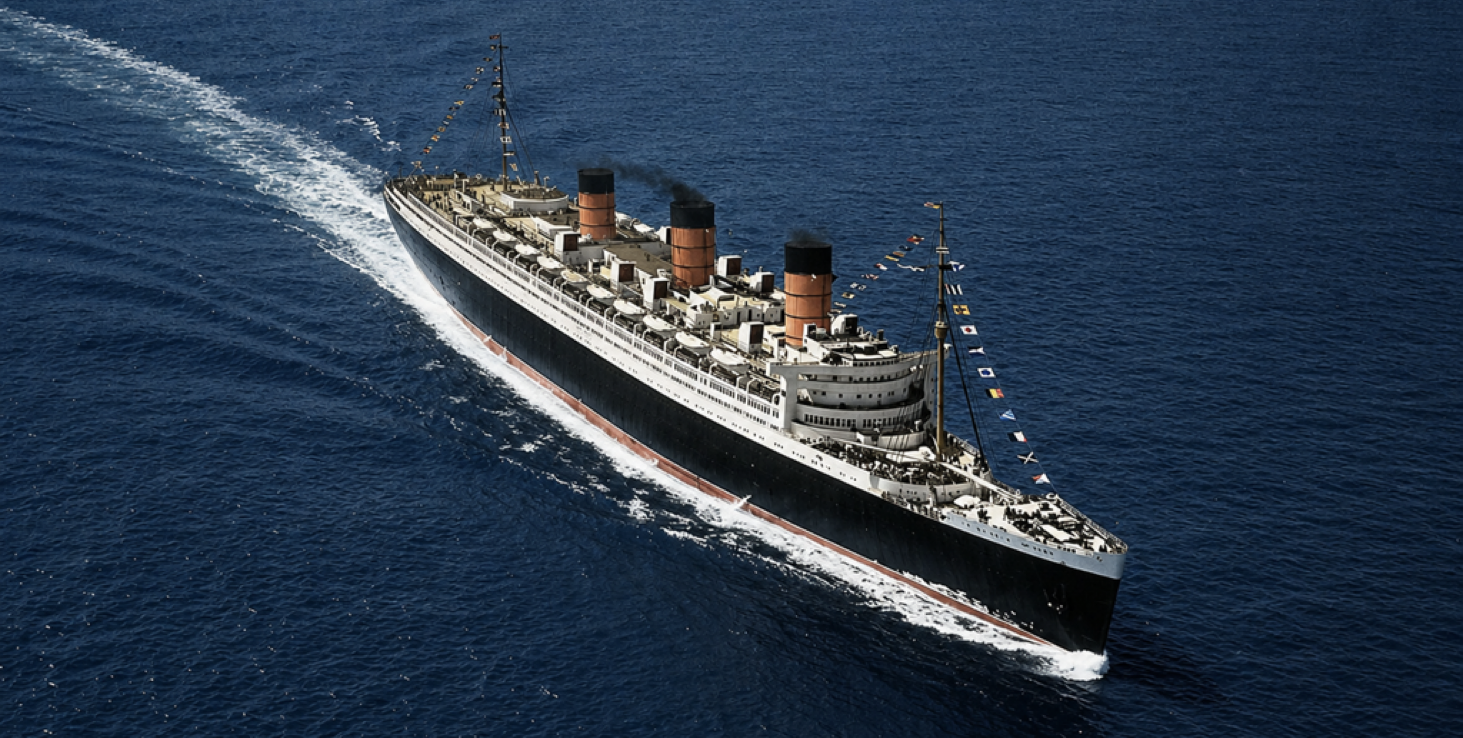
A curator-minded timeline tracing Queen Mary from construction and launch through Atlantic fame, wartime service, postwar passenger career, retirement, and preservation.
Travel the timeline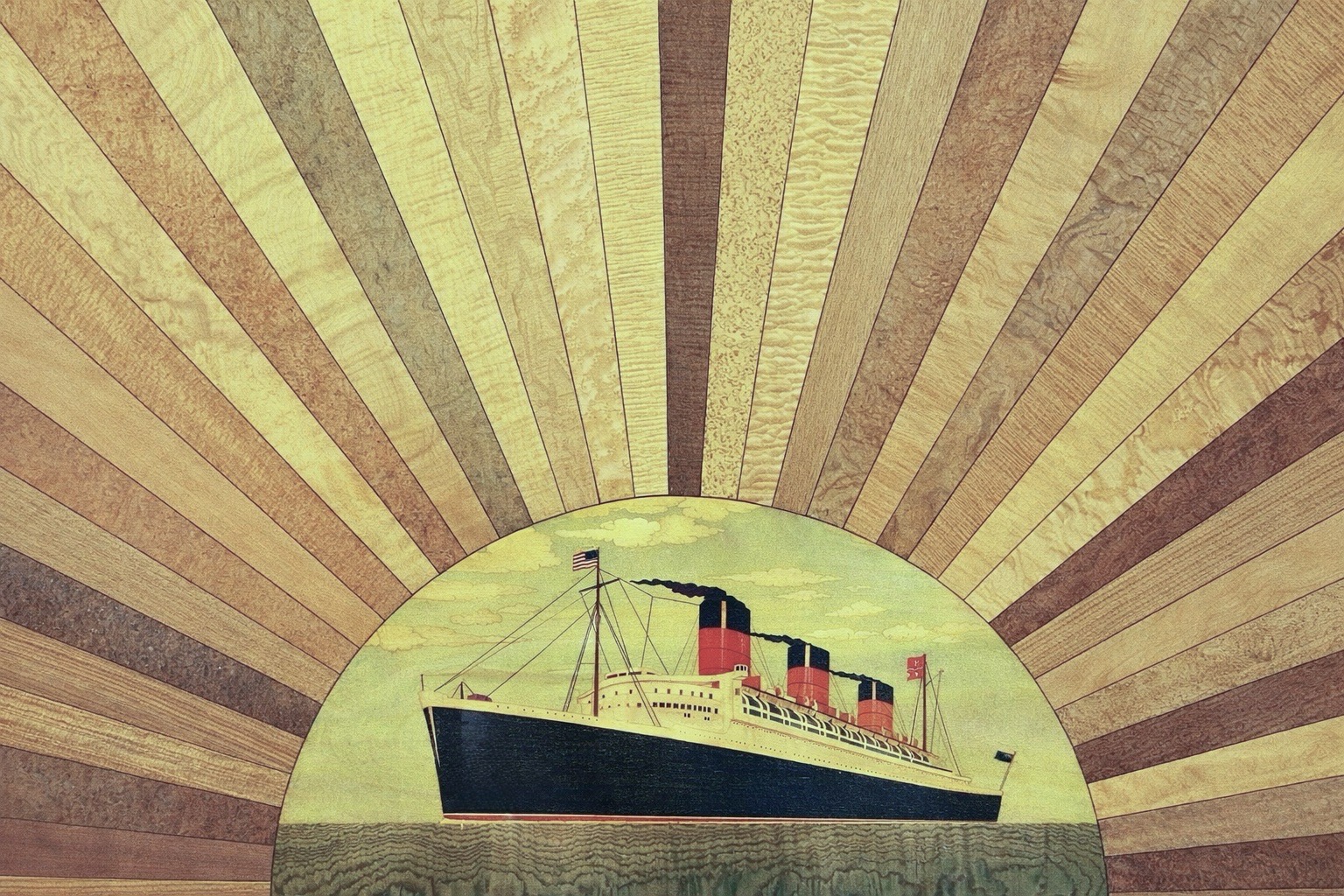
Public rooms, decorative language, social spaces, and the visual character that helped make Queen Mary one of the most recognizable liner interiors of her era.
See the interiors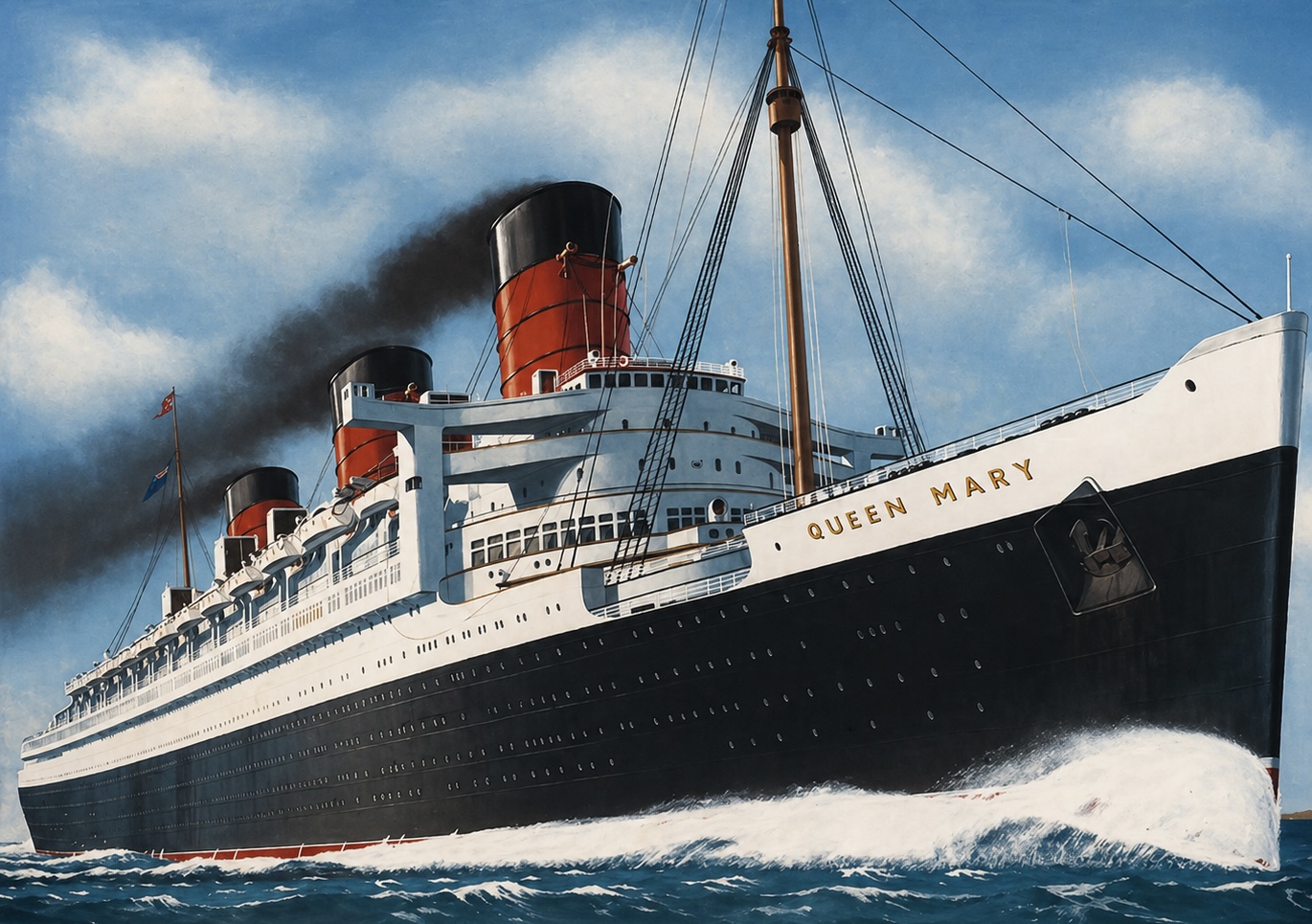
A page exploring why speed mattered, what prestige meant in the liner world, and how Queen Mary came to symbolize more than transport alone.
Read more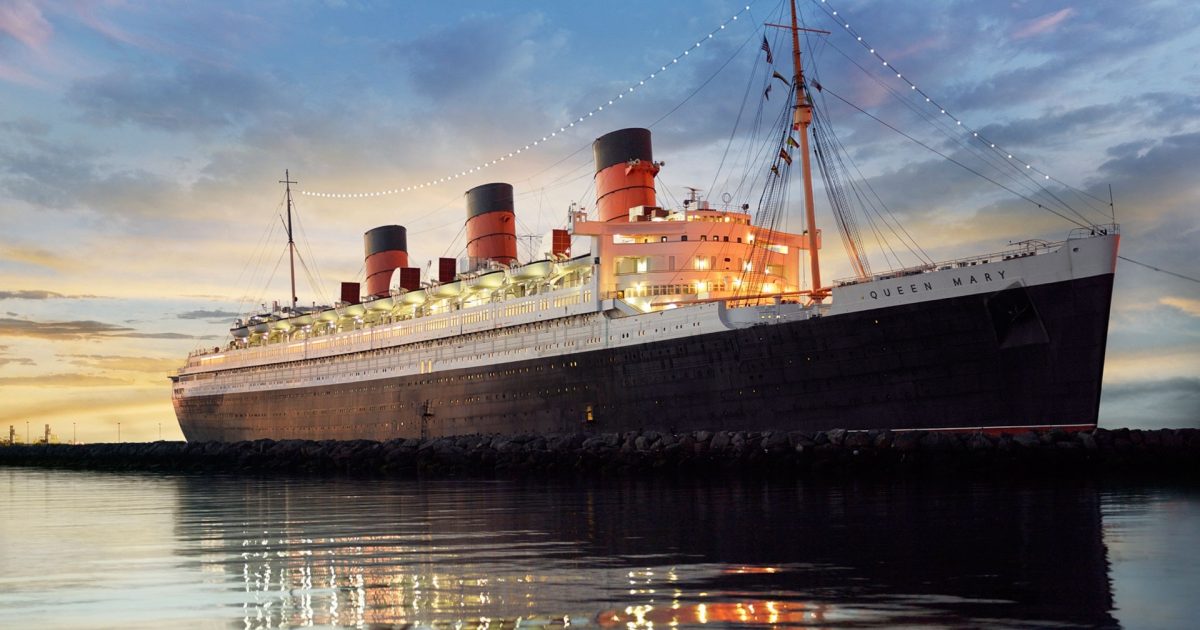
A guide to her enduring status: what made Queen Mary historically important, how her reputation formed, and why she remains central to public memory of the liner era.
Read more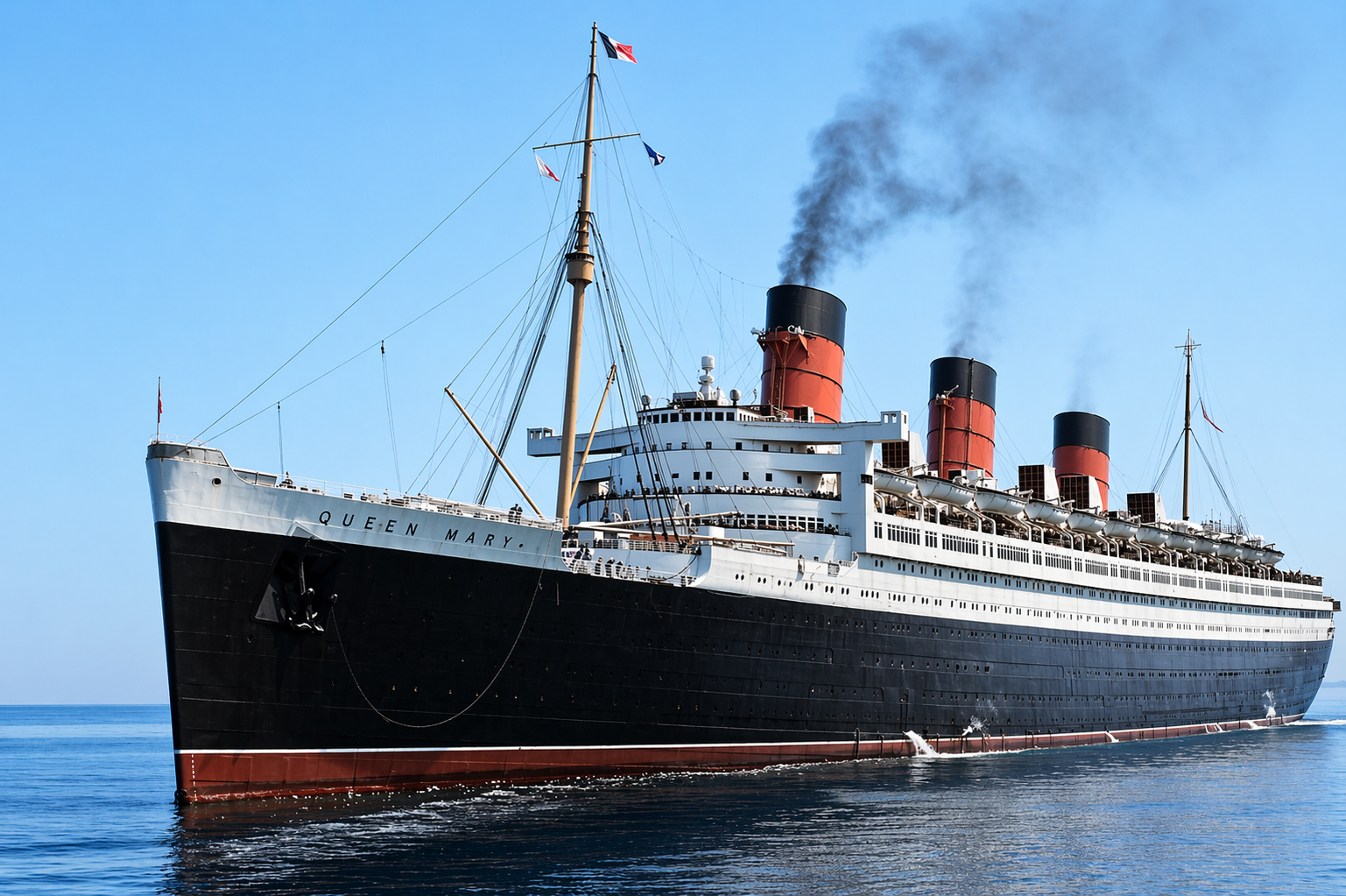
A curator-minded reconstruction of a typical Atlantic crossing aboard Queen Mary: boarding, meals, public spaces, deck routines, and the feel of life aboard.
All aboard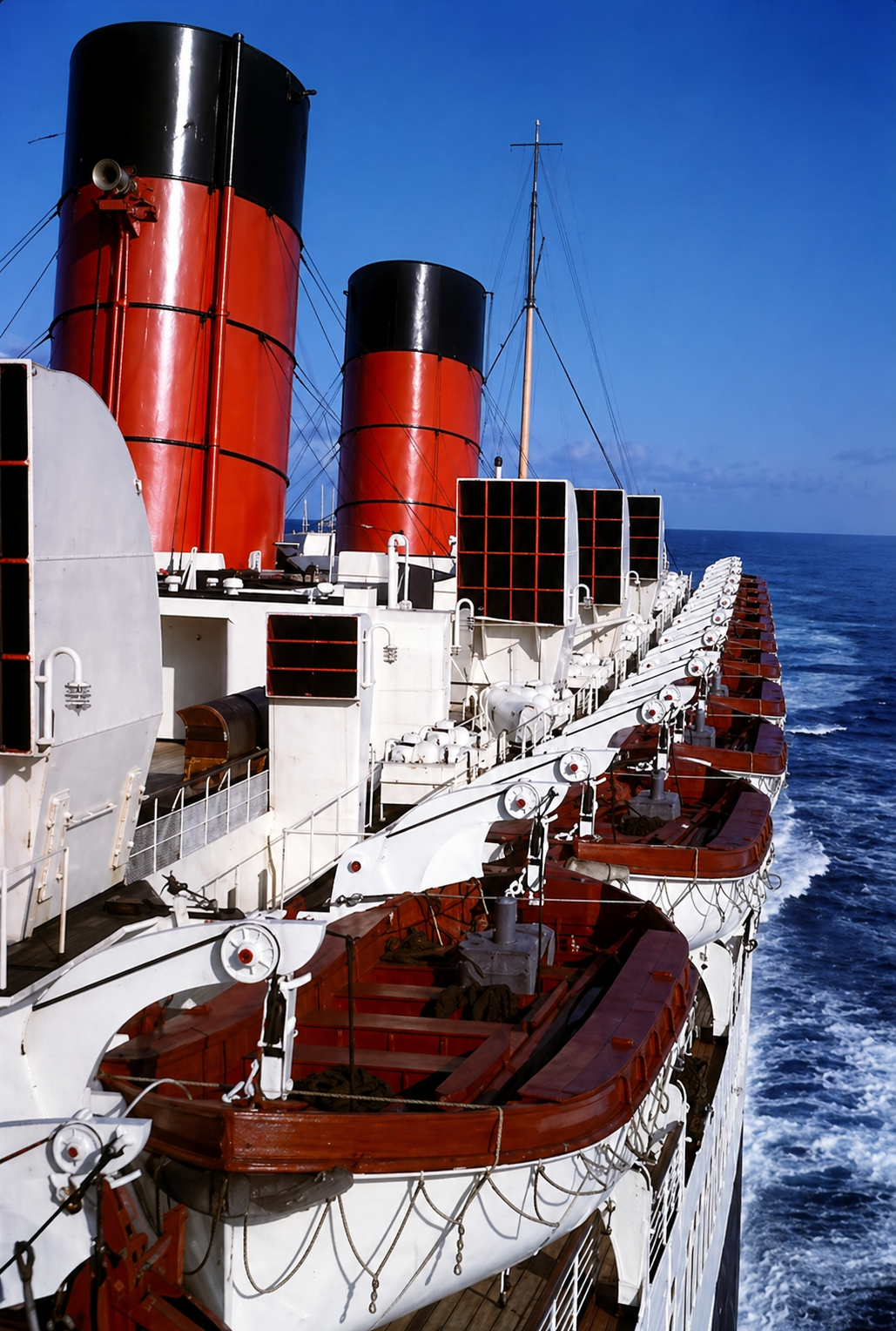
A factual grounding page for one of the great Cunard liners: dimensions, tonnage, capacity, machinery, and how Queen Mary compared with the major ships around her.
Read moreA strong ship hub does more than point to a single guide. It also helps you move outward into interpretation, comparison, and source-minded reading.
Related pages can show Queen Mary from several angles: prestige liner, wartime transport, design object, preserved ship, and collector subject.
Queen Mary is especially rewarding when approached with careful attention to evidence: what can be tied securely to the ship, what belongs to later interpretation, and what should be described more cautiously.
Whether you arrived because of Cunard, Atlantic prestige, wartime service, interiors, collecting, or simple curiosity, this page should help take you to the next step into Queen Mary without losing the wider liner story around her.