Leviathan collecting material is broader than postcards alone. Menus, passenger lists, brochures, tickets, stationery, programs, and other paper survivals help trace how the ship was marketed, experienced, and remembered. Treated carefully, these objects are useful not only for collectors but for understanding the lived and printed culture of one of the most famous interwar liners.
⁂ Curator’s note: This page is organized as a documented collecting guide, not a promise that every marketplace item described as “Leviathan” is authentic. Inclusion should rest on period printing, voyage specificity, line identification, institutional custody, or strong collecting context. Attractive design alone is not provenance.
IncludedPeriod paper material
Postcards, brochures, menus, passenger lists, programs, stationery, tickets, receipts, and other printed objects with clear Leviathan relevance.
ExcludedLoose modern attribution
Later fantasy prints, decorative reproductions, ungrounded seller descriptions, and modern nostalgia items should stay outside the core collecting record.
MethodVoyage context matters
A menu from a named date, a passenger list from a specific crossing, or a brochure tied to United States Lines is stronger than an isolated scan without context.
How to read this collecting page
Leviathan paper material falls into a few distinct families. Postcards circulated the ship as image. Brochures and advertising sold the ship as experience. Menus, programs, and stationery belong to life aboard. Passenger lists, sailing schedules, contracts, and receipts tie the ship to specific crossings and named travel contexts. Grouping them this way helps keep collecting standards clear and helps separate display value from documentary value.
Postcards & printed ship views
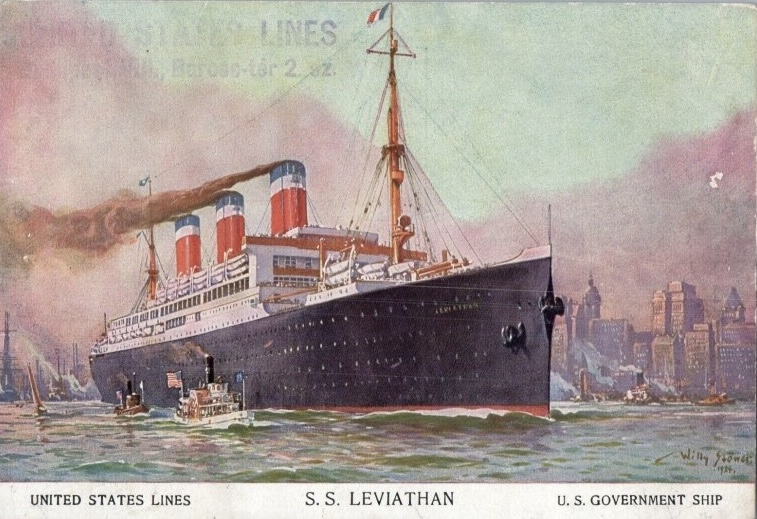
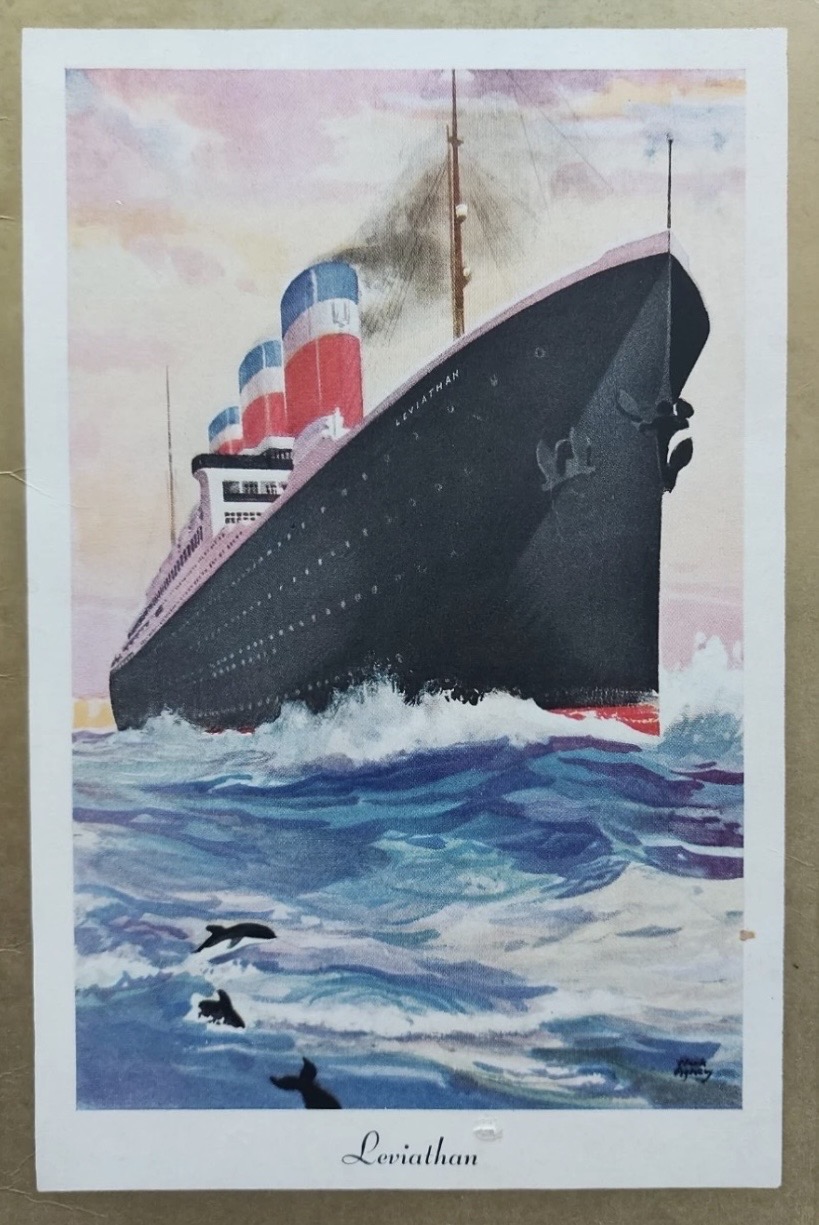
Postcards are often the easiest Leviathan paper collectibles for new collectors to recognize. They present the ship as image: formal profile views, harbor scenes, idealized color prints, or touristic ship portraits. They are highly collectible, but they should still be checked for period printing style, publisher markings, and whether the card belongs to United States Lines service context rather than later souvenir reuse.
The classic Leviathan postcard usually presents the ship as a stable, impressive profile. Cards like this are visually appealing and form an accessible entry point into collecting, but they are strongest when the reverse, publisher line, series number, or printed title can still be examined.
Collecting note: Look for period card stock, publisher credit, naming conventions, and whether the view belongs to the ship’s active United States Lines career rather than later nostalgia printing.
Illustrated postcardVariant
Illustrated Postcard Variant
Type: color or painterly postcard · Collecting focus: aesthetics versus documentary value
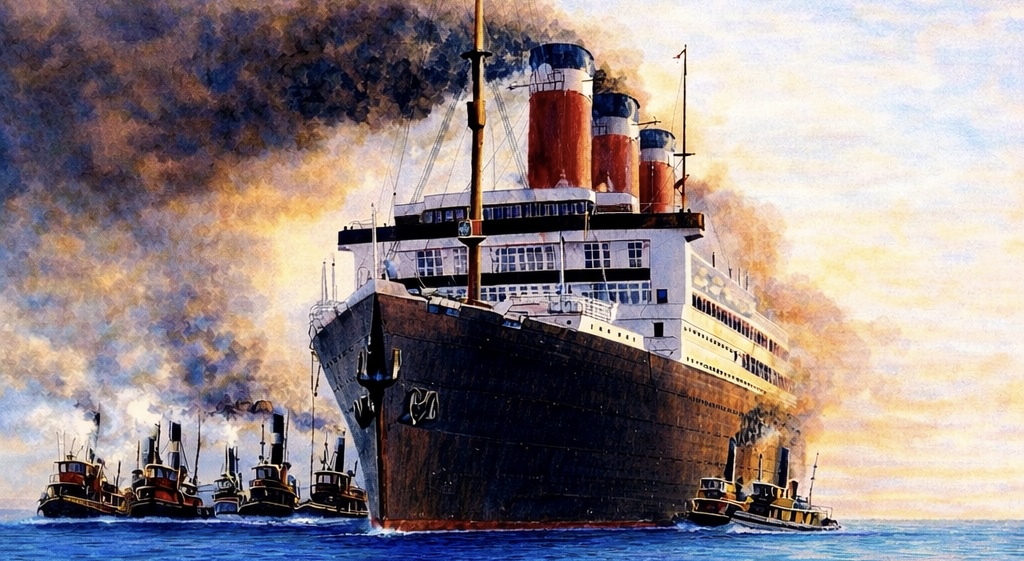
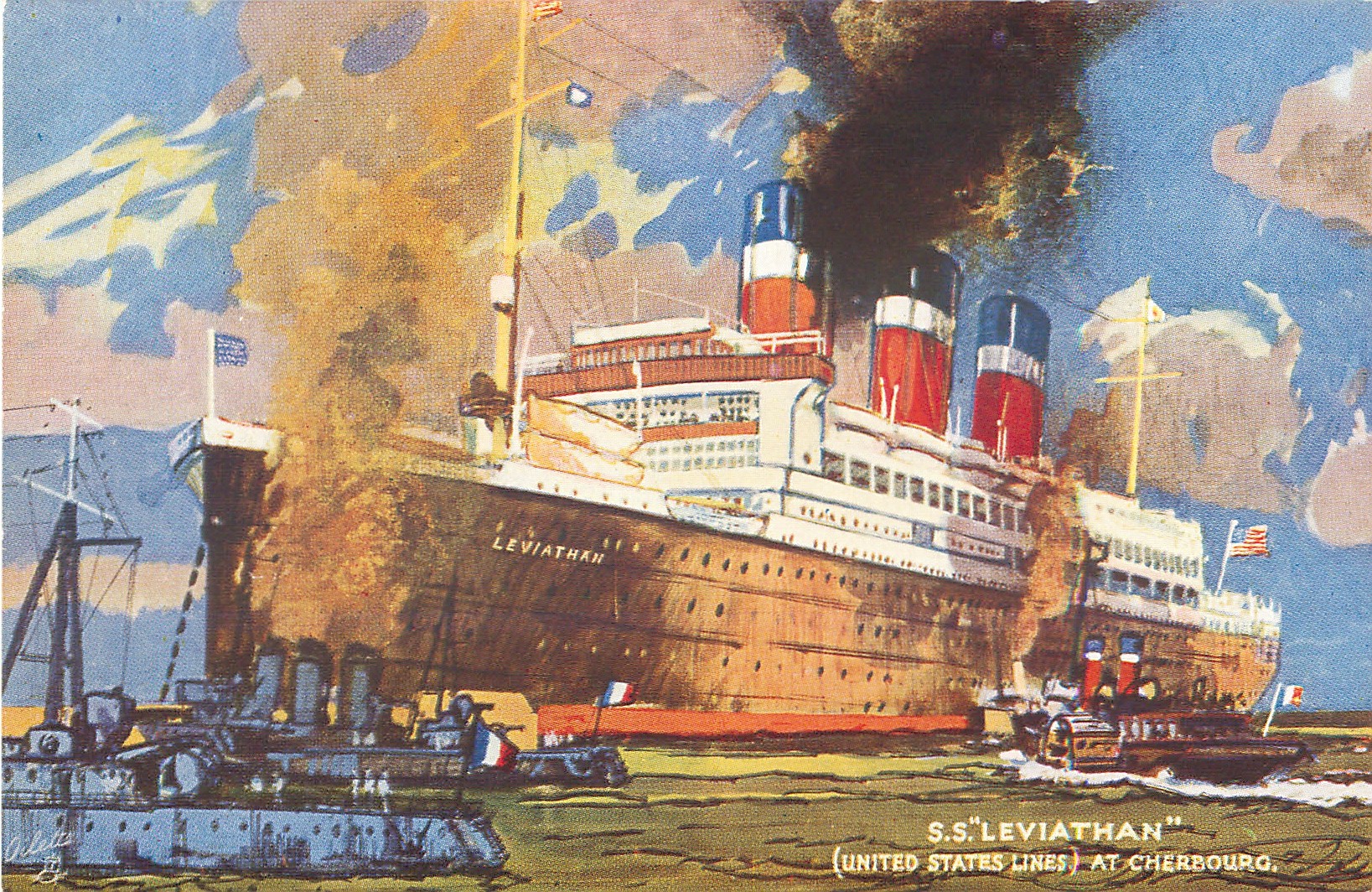
Some Leviathan postcards lean toward idealized illustration rather than strict photographic rendering. These can be beautiful objects in their own right, but they should be cataloged as promotional or artistic views rather than treated as literal documentary images.
Collecting note: A visually dramatic image is not automatically the most historically useful one. Caption accuracy, period issue, and publisher context matter more than spectacle.
Brochures, folders & promotional literature
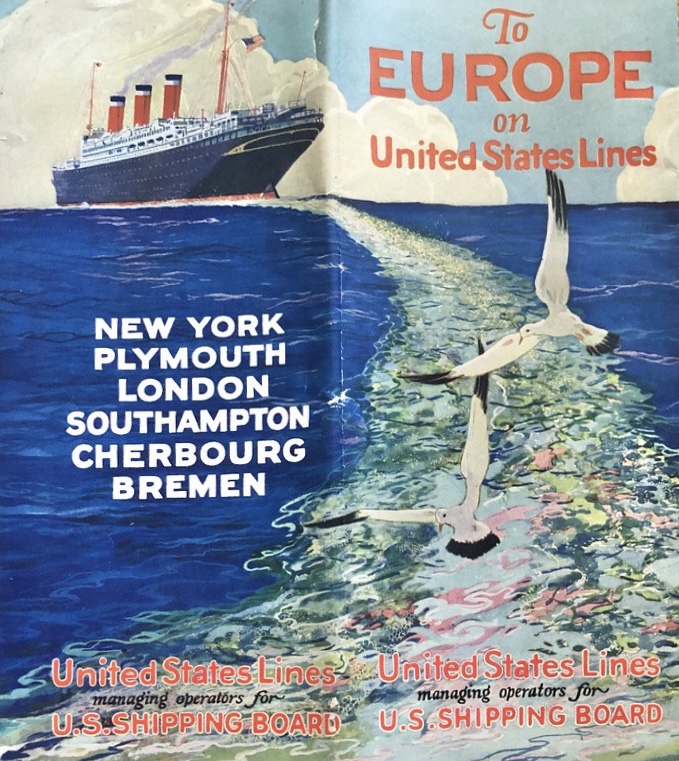
Brochures and fold-out booklets shift the focus from image collecting to ship marketing. They describe accommodations, routes, services, and the ship’s prestige, often with richer design and more text than postcards. These pieces are especially useful because they show how Leviathan was presented to prospective passengers rather than only how she was pictured.
BrochureUnited States Lines
Promotional Brochure
Type: brochure or sales booklet · Collecting focus: route text, class information, graphics, travel rhetoric
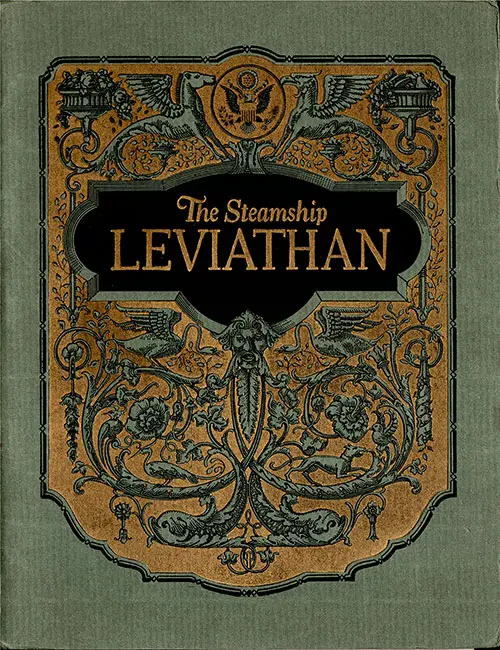
Leviathan brochures are among the strongest printed artifacts for understanding how the ship was sold to the public. They often carry more context than postcards: class distinctions, route framing, vessel prestige, and the visual language of modern transatlantic travel.
Collecting note: Covers are attractive, but interior pages often matter just as much. They can contain deck plans, class descriptions, room imagery, or sailing context that makes the piece far more informative.
Fold-out material often has a fragile survival pattern, so complete examples are particularly appealing. These pieces bridge advertising and practical information, making them useful to both collectors and historians of passenger experience.
Collecting note: Check whether the item is complete, whether any folds are split, and whether all route maps or deck sections survive.
Menus, programs & life aboard
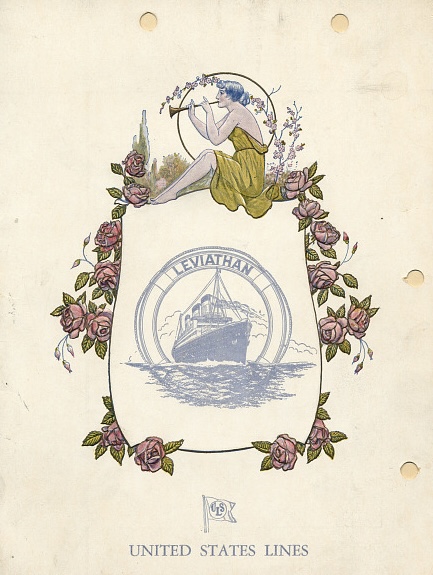
Menus and printed onboard programs are some of the most vivid Leviathan survivals because they record specific shipboard occasions rather than general promotion. They can preserve exact dates, meal service language, event framing, decorative design, and the tone of a particular crossing.
Menus are excellent collecting pieces because they tie Leviathan to a named onboard event. A dated menu can be more revealing than a postcard: it captures the ship not as an abstract icon, but as a functioning social environment with rituals, hospitality, and scheduled life.
Collecting note: Dated menus with clear voyage or occasion references are especially desirable because they anchor the object to a specific moment aboard ship.
ProgramOnboard life
Concert Program or Event Card
Type: onboard printed program · Collecting focus: event type, typography, paper condition, date
Programs and event cards often survive in smaller numbers than postcards, and they tell a different story. They preserve shipboard routine, entertainment culture, and the ceremonial texture of passenger travel.
Collecting note: These are strongest when they retain printed dates, class markers, or explicit Leviathan naming rather than surviving as detached decorative sheets.
This category is often less visually glamorous than postcards, but it can be the most documentary. Passenger lists, sailing schedules, contracts, receipts, and related paperwork tie Leviathan to specific departures, routes, and travelers. For collectors interested in named voyages or genealogical crossover, these are especially important.
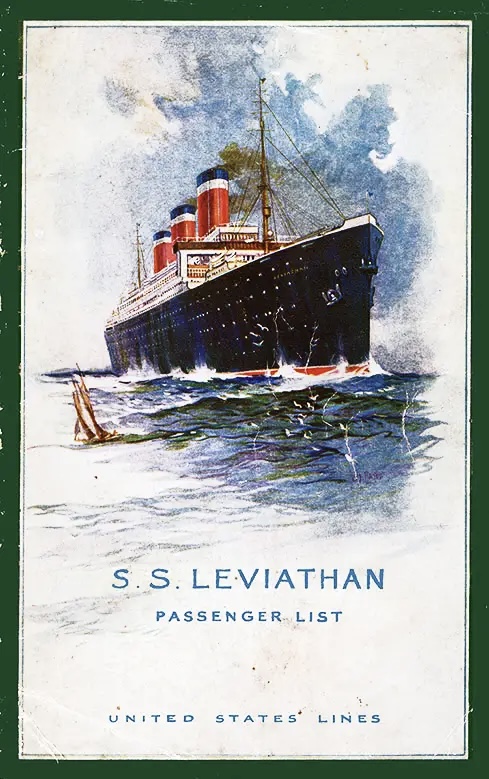
Passenger listVoyage-specific
Passenger List
Type: passenger list or manifest · Collecting focus: named voyage, departure port, completeness
Passenger lists are among the most documentary Leviathan paper items. They attach the ship to an exact sailing and often preserve class distinctions, route details, and a concrete travel framework that purely promotional material cannot provide.
Collecting note: Complete interior pages matter. A decorative cover alone is appealing, but the inner passenger data or sailing detail may be the real historical value.
Ticketing paperTravel document
Ticket, Receipt, or Passage Contract
Type: transactional paper item · Collecting focus: named line, date, route, traveler association
Tickets and receipts can look modest beside postcards, but they are powerful pieces of travel evidence. They connect Leviathan to commerce, booking systems, route structure, and individual passenger movement.
Collecting note: Even fragmentary items can be useful if they retain route text, line branding, class information, or voyage date. Personal names can add further historical value.
Stationery, letterheads & smaller survivals
Some of the most charming Leviathan material is also the easiest to overlook: stationery, letterheads, baggage-related paper, memo forms, and small printed objects that survived because passengers kept them. These items may not dominate a display case, but they often feel closest to lived travel.
StationeryLine identity
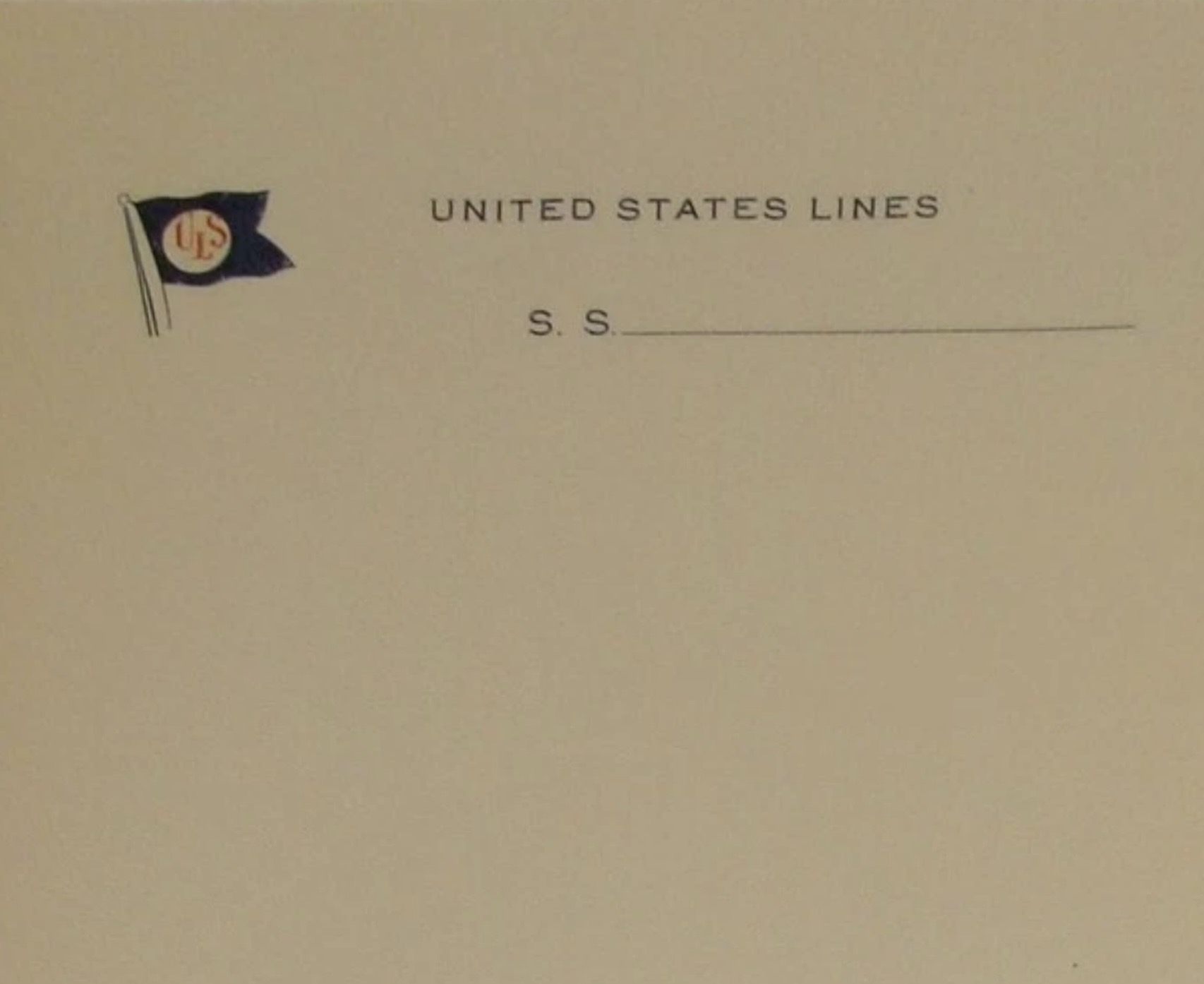
Stationery or Letterhead
Type: writing paper or headed stock · Collecting focus: printed crest, ship naming, paper quality
Leviathan stationery sits at an appealing intersection of utility and branding. It often carries the ship’s name in a restrained but elegant way and gives a more intimate sense of passenger use than larger publicity pieces.
Collecting note: Unused sheets are clean display objects, but written examples can also be valuable if they preserve a date, route, or onboard context.
Small ephemeraUtility paper
Small Utility Ephemera
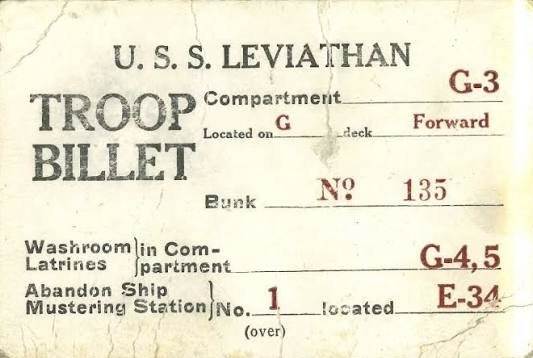
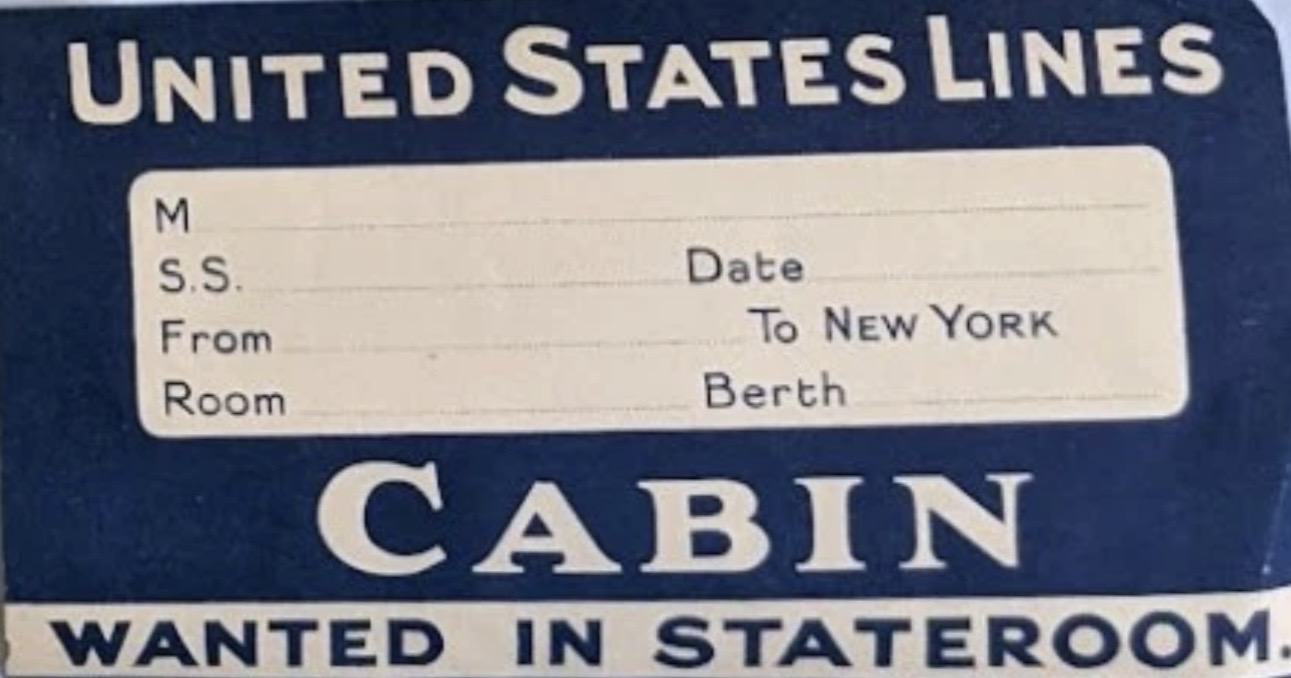
Type: notices, service paper, tags, or minor printed items · Collecting focus: survival rarity, line marking, function
Small-format paper items can be surprisingly revealing because they show how the ship actually functioned in daily use. They may not be as immediately dramatic as a postcard or menu, but they often preserve a stronger sense of operational reality.
Collecting note: When identifying these pieces, the key question is usually function: what was this paper for, and what does that tell us about the onboard system it belonged to?
What makes a Leviathan paper collection strong?
The strongest Leviathan paper collection is not necessarily the one with the most items. It is the one that balances image material with documentary material. A few good postcards are useful, but they become much more meaningful when paired with a brochure, a dated menu, a passenger list, or a piece of stationery that pushes the ship from visual icon into lived historical object.
This is also why category labeling matters. A postcard should not be asked to do the work of a passenger list, and a menu should not be mistaken for a publicity folder. Each paper type records a different layer of the ship’s history.
Curator’s takeaway: The best Leviathan collecting page is one that distinguishes between ship image, ship marketing, shipboard life, and voyage documentation. Once those categories are clear, authenticity questions become easier and the collection itself becomes more intelligible.
Continue Exploring Leviathan
These pages would pair naturally with Leviathan paper collectibles by placing the ship itself, her interiors, and her broader history back into view.
This page follows an evidence-first collecting standard: prioritize period pieces with identifiable ship, line, or voyage context; distinguish attractive imagery from stronger documentation; and treat catalogs, archives, and named institutional or archival collections as firmer grounding than unsourced marketplace description alone.