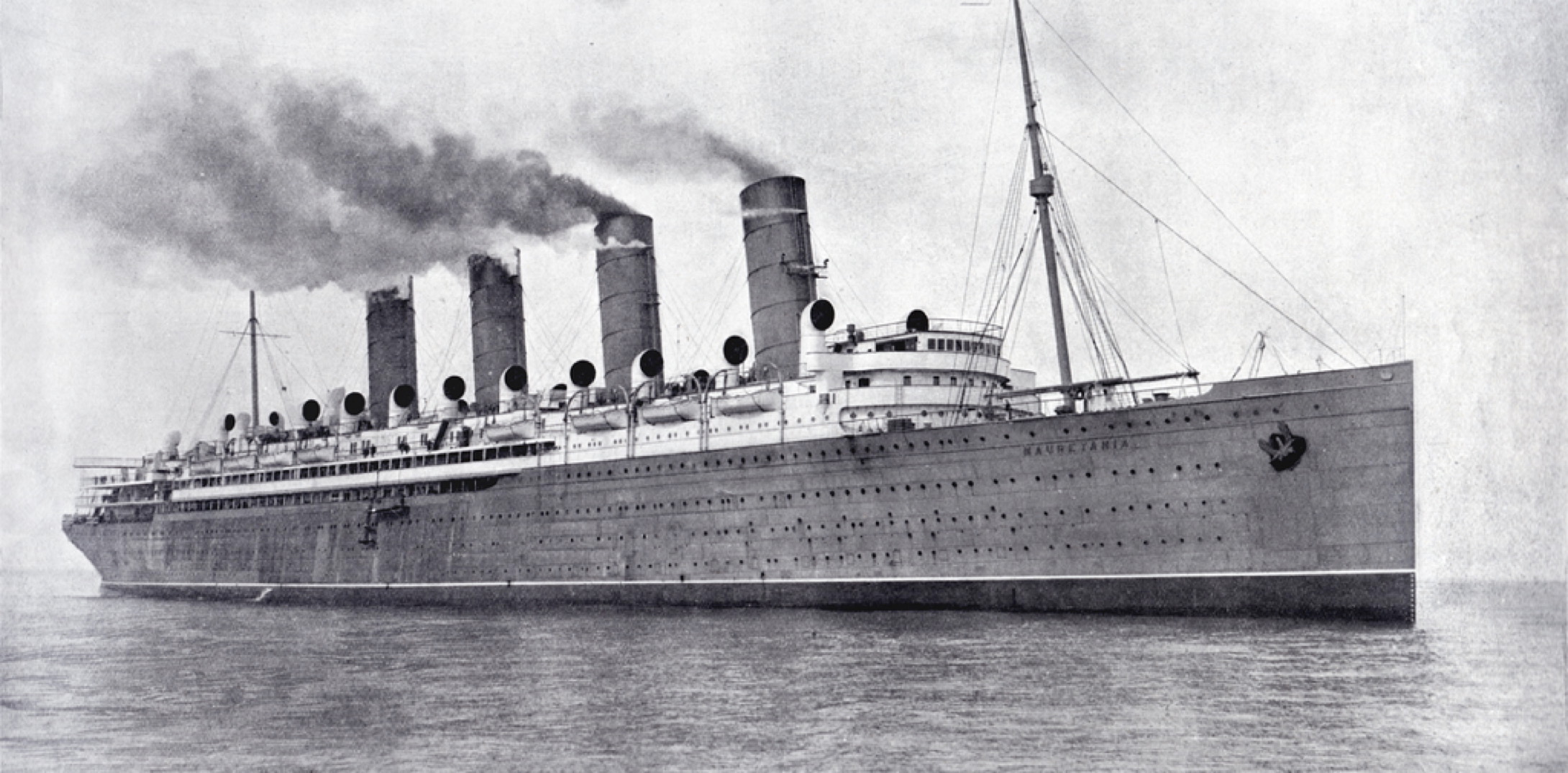
RMS Mauretania
Cunard Line · 1907 · Ship Guide
Overview
RMS Mauretania was a British transatlantic express liner built for the Cunard Line and entered service in 1907. Together with her sister RMS Lusitania, she represented a decisive shift toward turbine-powered speed and modern long-distance reliability on the North Atlantic—an “express liner” concept that shaped passenger expectations well into the interwar era.
This page is written as a reference doorway: it summarizes widely documented facts, flags uncertainty where it exists, and avoids turning repeated anecdotes into “record” without evidence.
Key Facts
Note on figures: exact tonnage and “record” statements can be versioned—different sources may cite different measurement conventions or emphasize different crossings and timing methods.
Design & Construction (Context)
Mauretania belongs to a pivotal moment when turbine propulsion moved from novelty to strategic advantage. The ship’s identity is therefore tightly bound to speed: public marketing, press attention, and passenger expectations all framed her as a modern “express” instrument rather than simply a large floating hotel.
For collectors, this “speed-era Cunard” context is useful: ship stationery, menus, printed sailing lists, postcards, and souvenirs often participate in that prestige narrative. Attribution improves when you can match typography, printer marks, and branding language to a narrow time window (prewar vs wartime vs postwar).
Service History (Summary)
From 1907 onward, Mauretania operated primarily on the North Atlantic and developed a reputation for fast, consistent passages. In 1909 she is widely credited with capturing the Blue Riband and became one of the signature ships of the pre–First World War era.
During World War I, she served in multiple capacities commonly summarized as armed merchant cruiser and later troop transport / hospital ship roles (details depend on the specific period and official status). After the war, she returned to commercial service in a changed travel market, now competing with newer ships and evolving passenger expectations.
In the 1920s and early 1930s, Mauretania continued service with modifications over time, but the economics of operation increasingly favored newer, more efficient liners. She was withdrawn in the mid-1930s and scrapped shortly thereafter.
Later History & Final Disposition
Mauretania’s scrapping created an “afterlife” that matters directly to collectors: fittings and decorative elements could be dispersed, repurposed, or sold, and claims of origin can be tempting to accept at face value.
Ocean Liner Curator treats “from Mauretania” claims the way it treats all high-value provenance assertions: look for credible documentation, detailed match points to period photographs, and a traceable chain of custody. When those are absent, responsible labels include “attributed,” “reported,” or “unverified.”
Speed, Scale, and the Turbine Generation
Royal Museums Greenwich describes Mauretania as both the world's largest liner when she entered service in 1907 and, within weeks, the fastest after surpassing her sister Lusitania. Her four Parsons turbines driving four screws placed her at the center of the transition from reciprocating machinery to turbine-powered express liners.
Her long association with the Atlantic speed record matters because it was sustained rather than momentary. Mauretania remained the benchmark until Bremen took the Blue Riband in 1929.
Two Wartime Roles
During the First World War Mauretania served in both troopship and hospital-ship roles. Royal Museums Greenwich records that she carried about 76,000 troops during wartime service.
These configurations should be separated from civilian Cunard service when interpreting photographs and plans. The same hull could be painted, partitioned, staffed, and used very differently depending on the assignment.
Oil Conversion and the Final Express Era
Withdrawn in 1921 for conversion from coal to oil firing, Mauretania returned to service the following year and continued alongside Berengaria and Aquitania. Her survival into the 1930s made her a living bridge between the prewar turbine revolution and the next generation of giant express liners.
Interpretive Notes
Most popular narratives around Mauretania revolve around “records” and “the fastest”—and those claims can be true in broad shape while still being vulnerable to oversimplification. Speed records depend on definitions (eastbound vs westbound, distance measured, timing method, weather, routing), and secondary sources sometimes compress a complex record history into a single clean phrase.
Treat the ship as a documented entity with multiple “versions” over time: prewar express liner, wartime service ship, postwar commercial veteran. For collecting, that approach helps avoid category errors (e.g., presenting postwar printed material as if it were prewar, or claiming a generic Cunard souvenir is ship-specific without evidence).
Evidence-first ship guideSources (Selected)
This list is intentionally conservative.
- Ocean Liner Curator — Sources (master bibliography)
- Encyclopaedia Britannica — “Mauretania” (overview)
- Royal Museums Greenwich — collections entry point (ship-related holdings search)
- Imperial War Museums — collections search (wartime context)
- The National Archives (UK) — government records discovery (requisition / convoy context)
- Clyde Ships — shipbuilding reference hub (use for cross-checking)
- Royal Museums Greenwich — RMS Mauretania model and service history