RMS Majestic
White Star Line · 1922 · Ship Guide
Overview
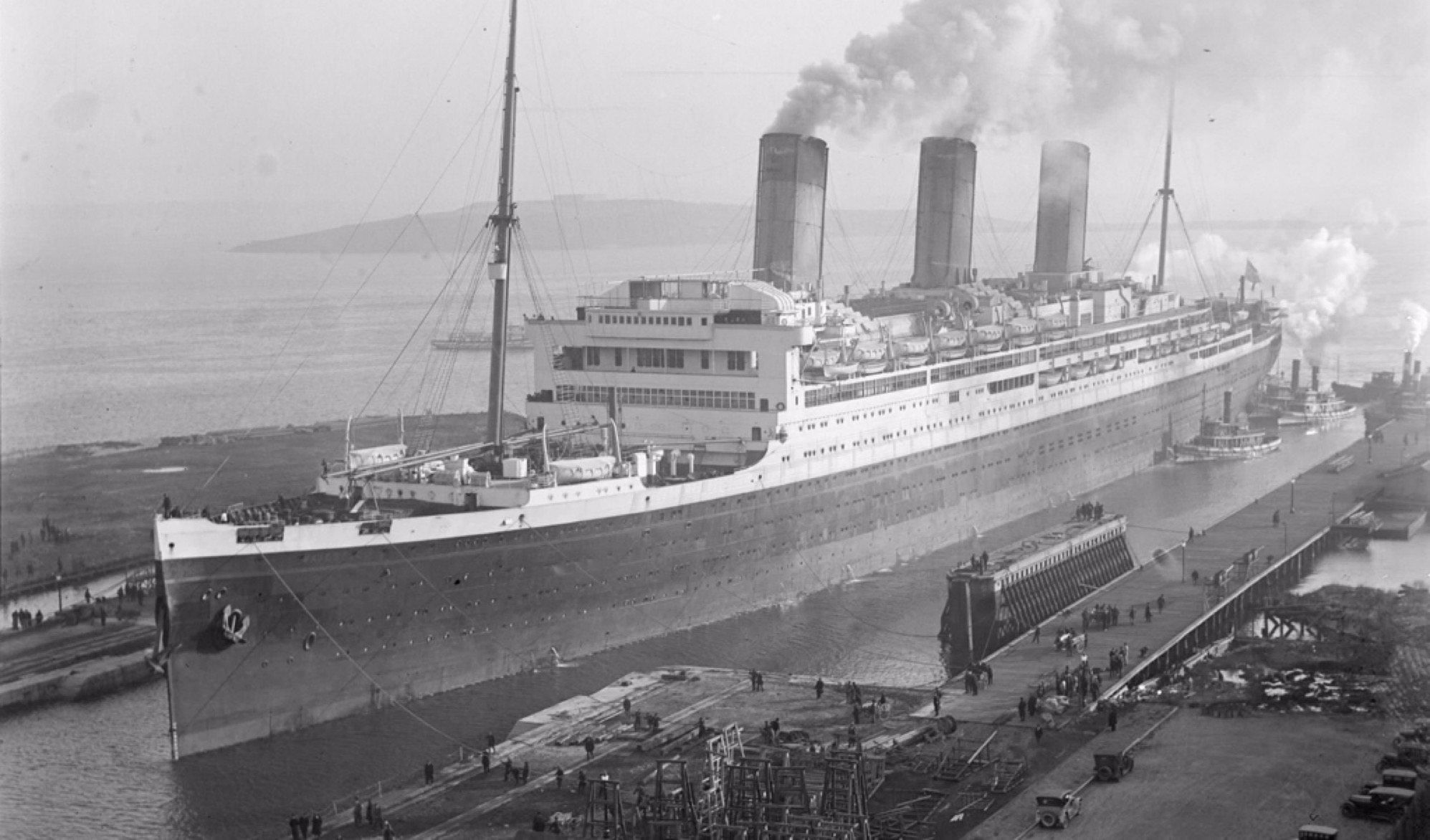
RMS Majestic was the White Star Line identity of the unfinished German liner Bismarck, the third of Hamburg America Line’s giant Imperator-class ships. Launched at Blohm & Voss on 20 June 1914, she spent the First World War incomplete and entered service only after being transferred to British control as part of the postwar settlement.
Completed under British supervision, the ship arrived at Southampton in April 1922 and departed on her first White Star voyage to New York on 10 May. She later became the naval training ship HMS Caledonia, was destroyed by fire at Rosyth on 29 September 1939, and was finally raised and broken up during the war.
Key Facts
Bismarck Without a German Career
Bismarck was conceived as a German prestige liner but never entered HAPAG passenger service. Construction halted during the First World War, leaving the ship as a materially incomplete symbol of a vanished prewar competitive order.
This creates an important provenance distinction. German plans, launch material, and construction photographs belong to Bismarck; passenger-service ephemera belongs to White Star’s Majestic.
Completion and the White Star Flagship
After the war, the unfinished ship was assigned to British interests and completed at Blohm & Voss under supervision connected with Harland & Wolff. She reached Southampton in April 1922 in White Star colors.
Majestic departed Southampton for New York on 10 May 1922 and quickly became White Star’s flagship. At roughly 56,551 gross tons she was among the largest passenger ships in service and carried the prestige once intended for a German operator into an entirely different corporate setting.
1920s Service and Refit
Throughout the 1920s, Majestic operated alongside Olympic and Homeric on White Star’s Southampton service. A major 1928 refit changed passenger accommodation, enclosed part of the promenade, and included boiler work.
Those changes mean that interior plans and capacity figures should always be dated. The ship photographed in the early 1920s was not identical in arrangement to the late-1920s flagship.
Withdrawal and HMS Caledonia
Depression-era economics and fleet rationalization eventually made the ship expendable. After her final passenger service in 1936, she was sold for breaking, then reprieved when the Admiralty acquired her for use as a stationary training establishment.
Conversion included alterations to allow the vessel to pass beneath the Forth Bridge. Renamed HMS Caledonia, she reached Rosyth in 1937 and served as a training ship for naval cadets and artificer apprentices.
Fire, Sinking, and Salvage
On 29 September 1939, shortly after the outbreak of the Second World War, Caledonia caught fire at Rosyth and sank. Contemporary reporting emphasized that no one was aboard when the fire broke out.
Demolition and salvage proceeded in stages. The remaining hulk was not fully dealt with immediately; major wartime salvage work eventually raised it in 1943 for final breaking. The ending is therefore more complex than simply “burned and scrapped in 1939.”
Largest-Ship Claims and Dating
Majestic is often described simply as “the largest ship in the world,” but that claim only makes sense with a date and measurement convention. She entered service among the largest liners afloat and remained a major size benchmark through the 1920s, but later ships displaced her. Curatorial labels should avoid turning a time-limited superlative into a permanent characteristic.
The same caution applies to passenger capacity. The 1928 refit altered accommodation, so early and late White Star figures should not be blended into one supposedly fixed total.
Collecting Bismarck, Majestic, and Caledonia
Construction material marked Bismarck, White Star passenger ephemera marked Majestic, and naval-training documentation for HMS Caledonia all belong to the same physical hull but to radically different institutional lives. For provenance, the printed identity on the object is more important than the name by which the ship is best remembered today.
Fire and salvage photographs from 1939–43 form yet another distinct category. They document the wreck and dismantling process, not the ship’s passenger-service appearance.
Why Majestic Matters
Majestic is one of the clearest examples of political events rewriting a ship’s identity before its commercial life even began. A German imperial project became White Star’s British flagship and later a Royal Navy training establishment.
For collectors, the key is timestamped identity: Bismarck, RMS Majestic, and HMS Caledonia are not interchangeable labels. Each belongs to a different operator, physical configuration, and documentary world.
Evidence-first ship guideSources (Selected)
This list is intentionally conservative.