
Reference Object
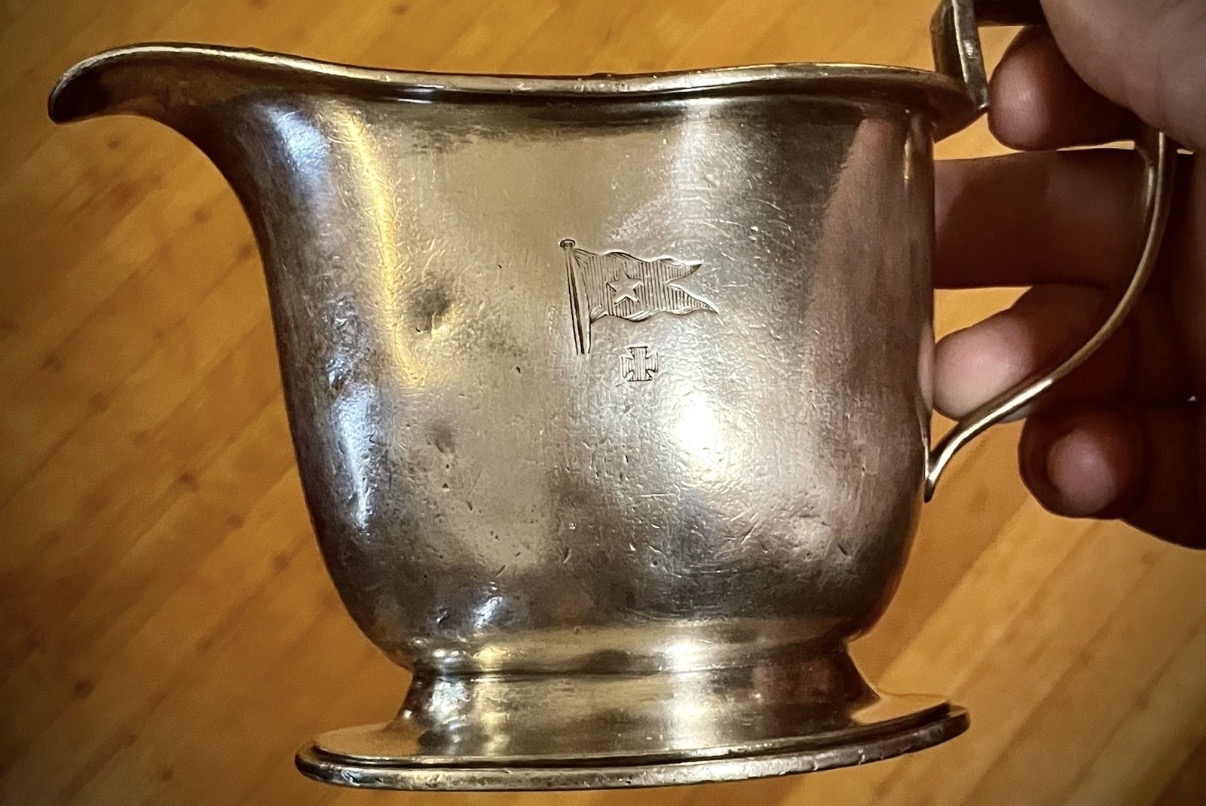
White Star Line-pattern creamer attributed to Elkington (line-consistent; ship association unverified)
Primary Visual Evidence
Attribution Assessment
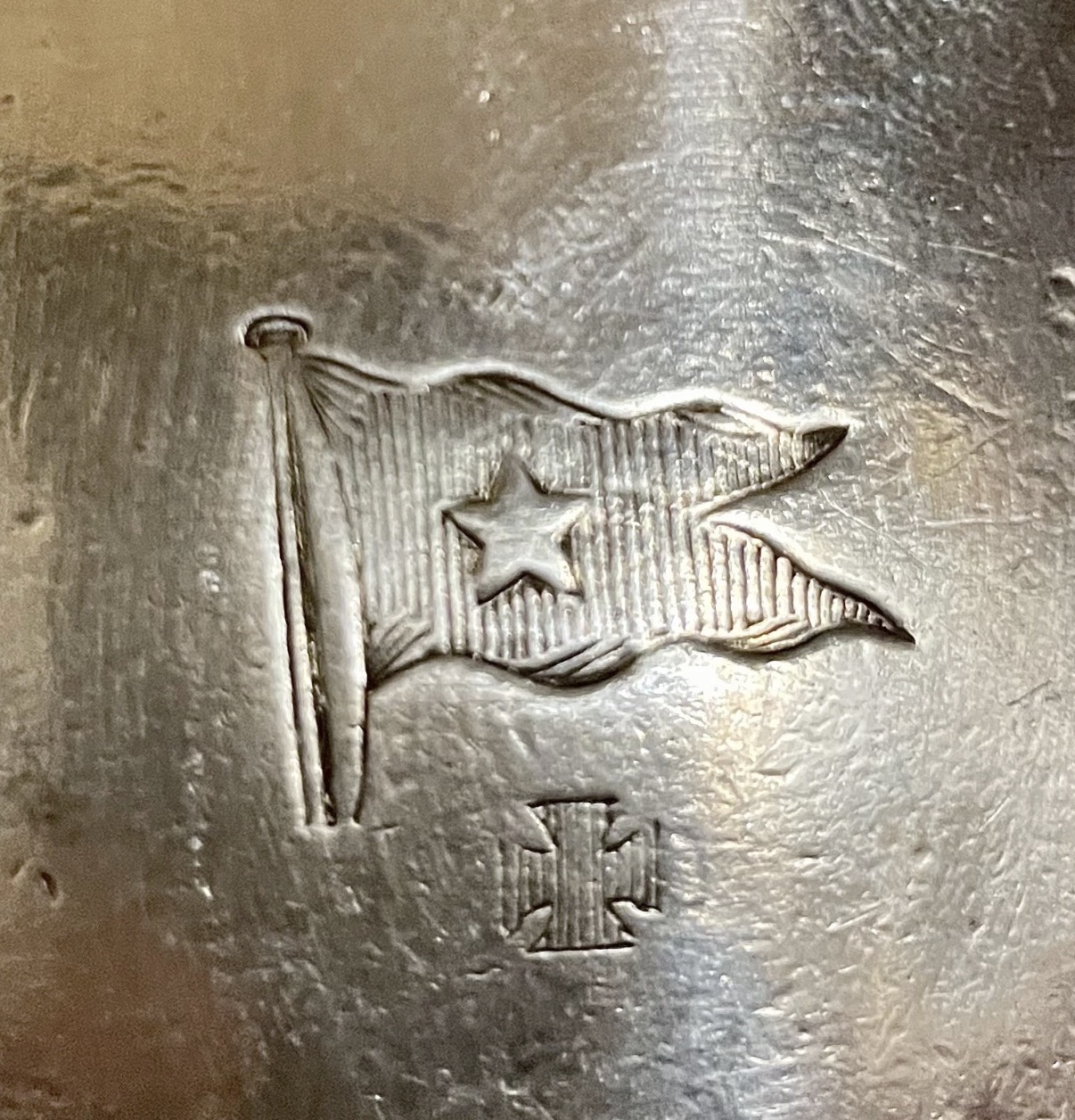
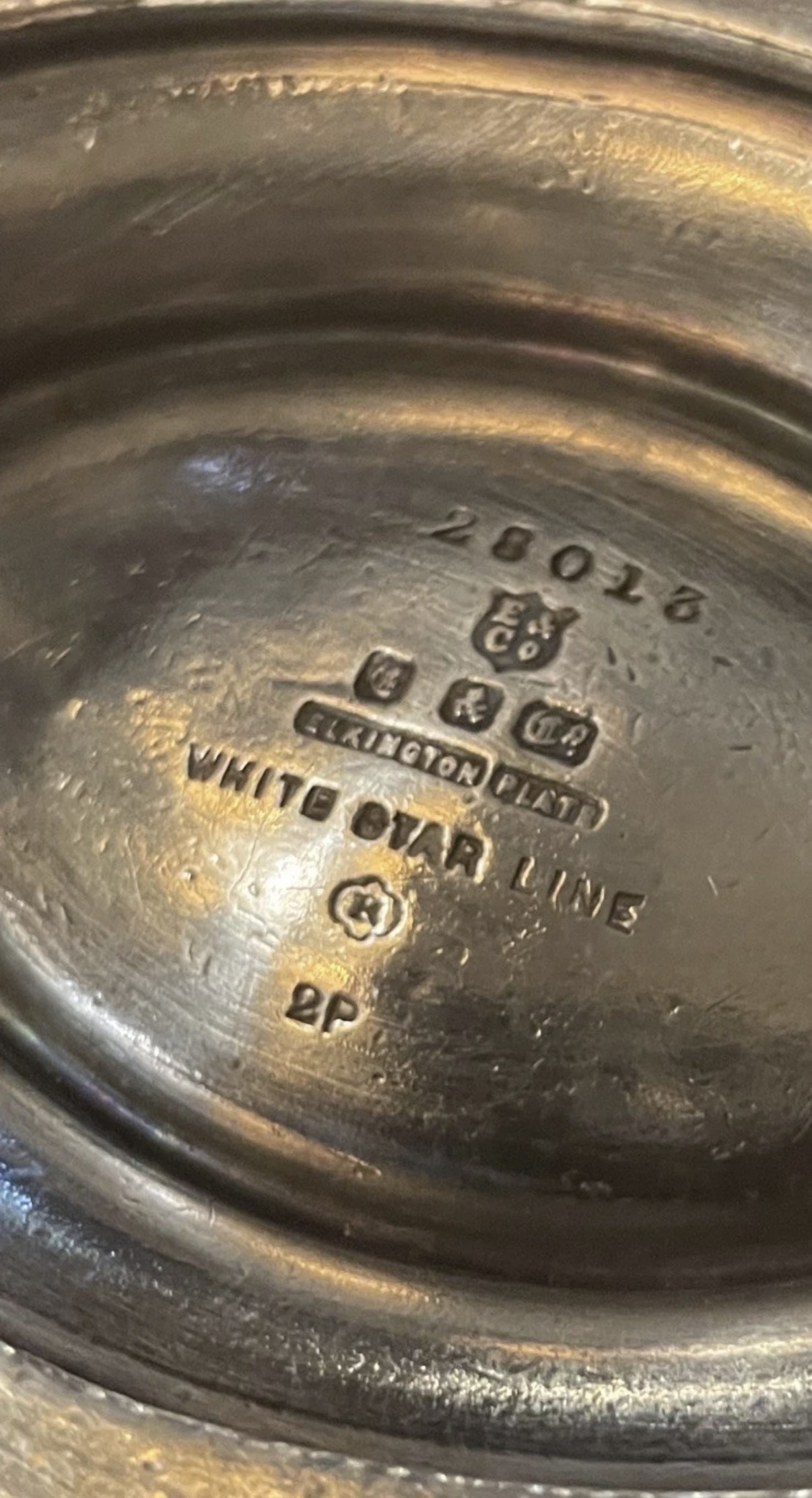
This object is a silverplate creamer attributed to Elkington and associated in collector tradition with White Star Line table service patterns. The visible body stamp includes a flag motif commonly used as a White Star Line visual shorthand in the collector market. Based on the images available, the piece is plausibly line-consistent, meaning consistent with known styles and marking practices used on British-made steamship and hotel silverplate.
Importantly, this page does not assign a specific ship from pattern similarity alone. While some White Star Line patterns are documented across multiple ships and eras, ship-level attribution requires stronger evidence such as ship or inventory stamps, deaccession paperwork, a reliable chain of custody, or archival corroboration.
Historical Context
In the early 20th century, major passenger lines sourced large quantities of silverplate hollowware for dining service across multiple vessels and often across multiple refits. Makers such as Elkington supplied both maritime and hospitality clients, and patterns could be shared, updated, or reissued over time. As a result, pattern recognition can suggest a likely operator, but it rarely supports a specific ship without external proof.
Creamers of this type typically circulated in first- and second-class dining contexts as well as in pantries and service areas. Size alone, such as a reported seven-inch example, does not map reliably to class or to a particular ship; the strongest identifiers are stamps, codes, and provenance.
Limits of Evidence
- Ship-level claims, such as “Titanic-used,” are not supported by the currently available evidence. Pattern similarity is not proof of ship service.
- The visible marks and flag motif are insufficient without provenance to tie the object to a specific ship. The cited “K” mark is treated here as indicating a year of 1922.
- Many maritime and hospitality silverplate pieces share generic forms such as rolled rims, spout profiles, and wire handles. Typology helps with broad dating, not precise assignment.
- Without provenance, such as paperwork or a chain of custody, rarity and value should be discussed as market observations rather than as historical certification.
Object Record
Reference Notes
- Interpretive handling: treat as authentic silverplate hollowware; treat White Star Line association as plausible but not yet proven; do not assign to a specific vessel without documentation.